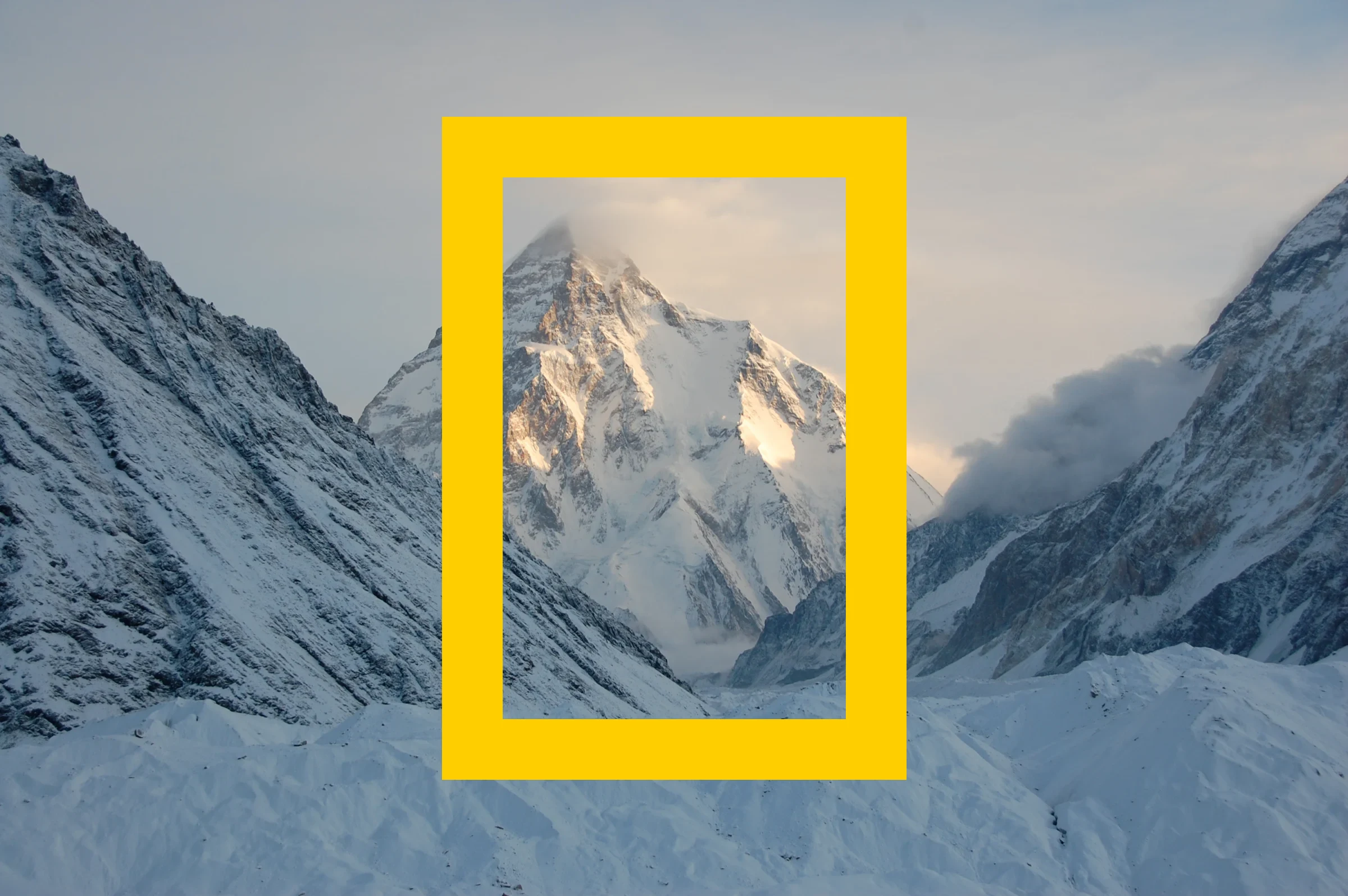
The frame inside the footage, with National Geographic
In 2021, National Geographic asked Taylor Rees and me to help choose the pictures from the first winter ascent of K2. Much of the record was film, so the job was finding the still inside the footage.
In January 2021, a team of ten Nepali climbers stood on the summit of K2 in winter. It was the last of the fourteen 8,000-metre peaks still unclimbed in that season, and Nirmal “Nims” Purja reached the top without supplemental oxygen.
That September, National Geographic asked Taylor Rees and me, then working together as Expedition Studios, to spend a day with Nims’s team going through what had come back from the mountain, and to choose a wide edit of visuals for a National Geographic story.
Most of it moved
A climb like that is recorded by the people doing it, with cold hands, at altitude, when there is a spare moment. A lot of the strongest material was film. So the job was less about picking the best photograph than finding the frame inside the footage that could stand on its own.
That is a different kind of looking. A clip works because of what comes before and after it. A still gets none of that help. It has to carry the moment by itself, and hold up at the size it will be printed.
Taking the film away
The questions on an edit like this are simple to ask and slow to answer. Is the frame sharp enough to use at all? Does it show something only this expedition could have shown: the conditions, the scale, the people in it? And will it make sense to a reader who has never been near a mountain?
The best frame is rarely the most dramatic one. It is the one that still makes sense when you take the film away.
Being a climber helps with the first two. It is the third that takes discipline, because the frames that mean most to people who were there are often the ones that explain least to people who weren’t.
Choosing is the work
The pictures were never ours. Our part was a day of looking hard and choosing well, for a story that had already happened. Most of what the studio does now starts the same way: a lot of material, a story that is already true, and a decision about what a stranger needs to see first.
Picture edit for National Geographic with Taylor Rees, Expedition Studios, September 2021. The expedition’s own photographs belong to Nims Purja and his team and are not reproduced here.
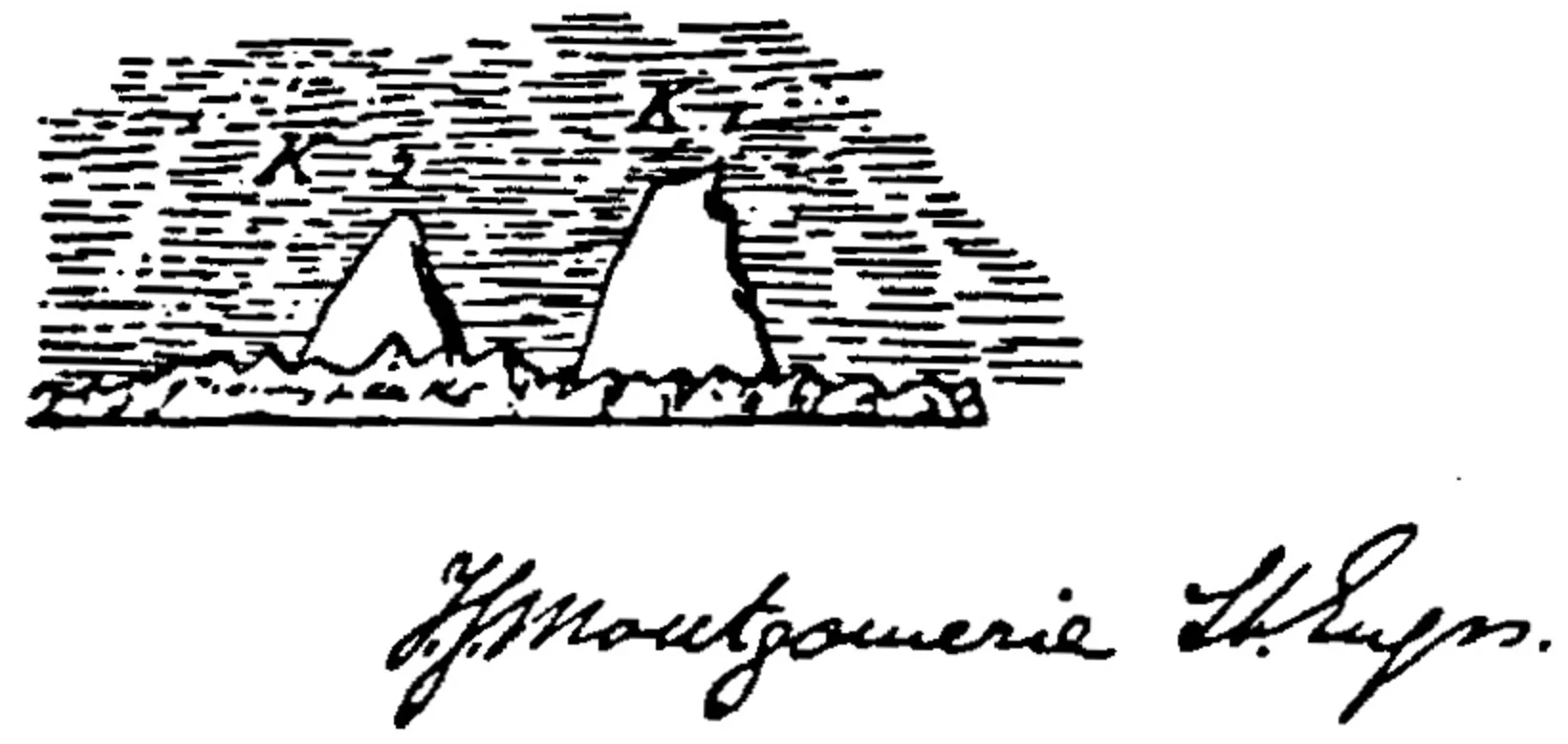
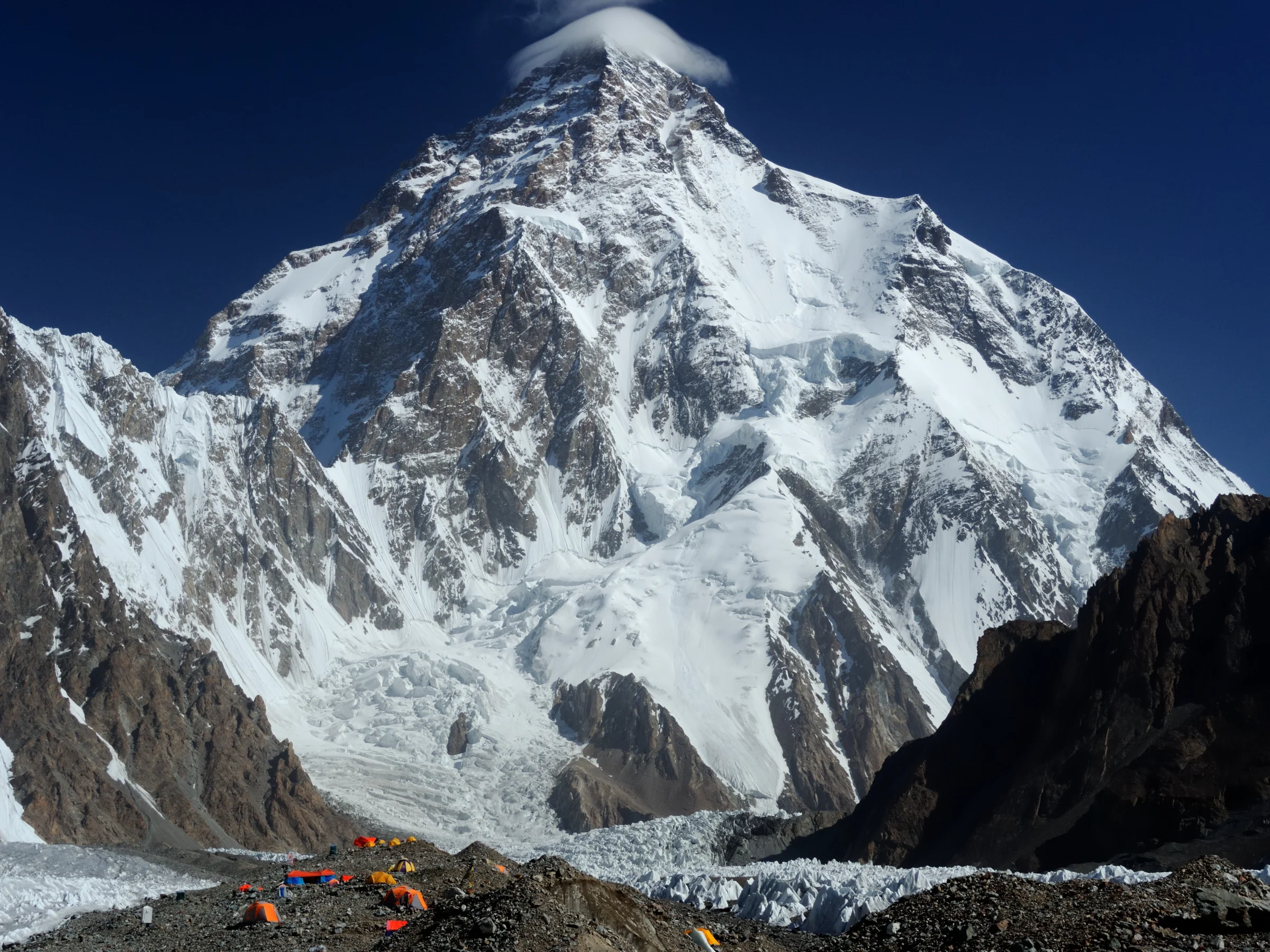
Images: lead, K2 by Maria Ly, CC BY 2.0, with the yellow frame added; survey sketch by Thomas Montgomerie, 1856, public domain; K2 from Broad Peak Base Camp by Zacharie Grossen, CC BY-SA 4.0. All via Wikimedia Commons, resized for the web.
Filed under Notes · Written by Charlie