
Product strategy that turns a range into a system.
A range that reads as uncertainty rather than breadth. A new category to bring to market. A collaboration that has to earn its second year. We write product strategy, range architecture and briefs for outdoor and expedition brands, then work inside the team to see them through.
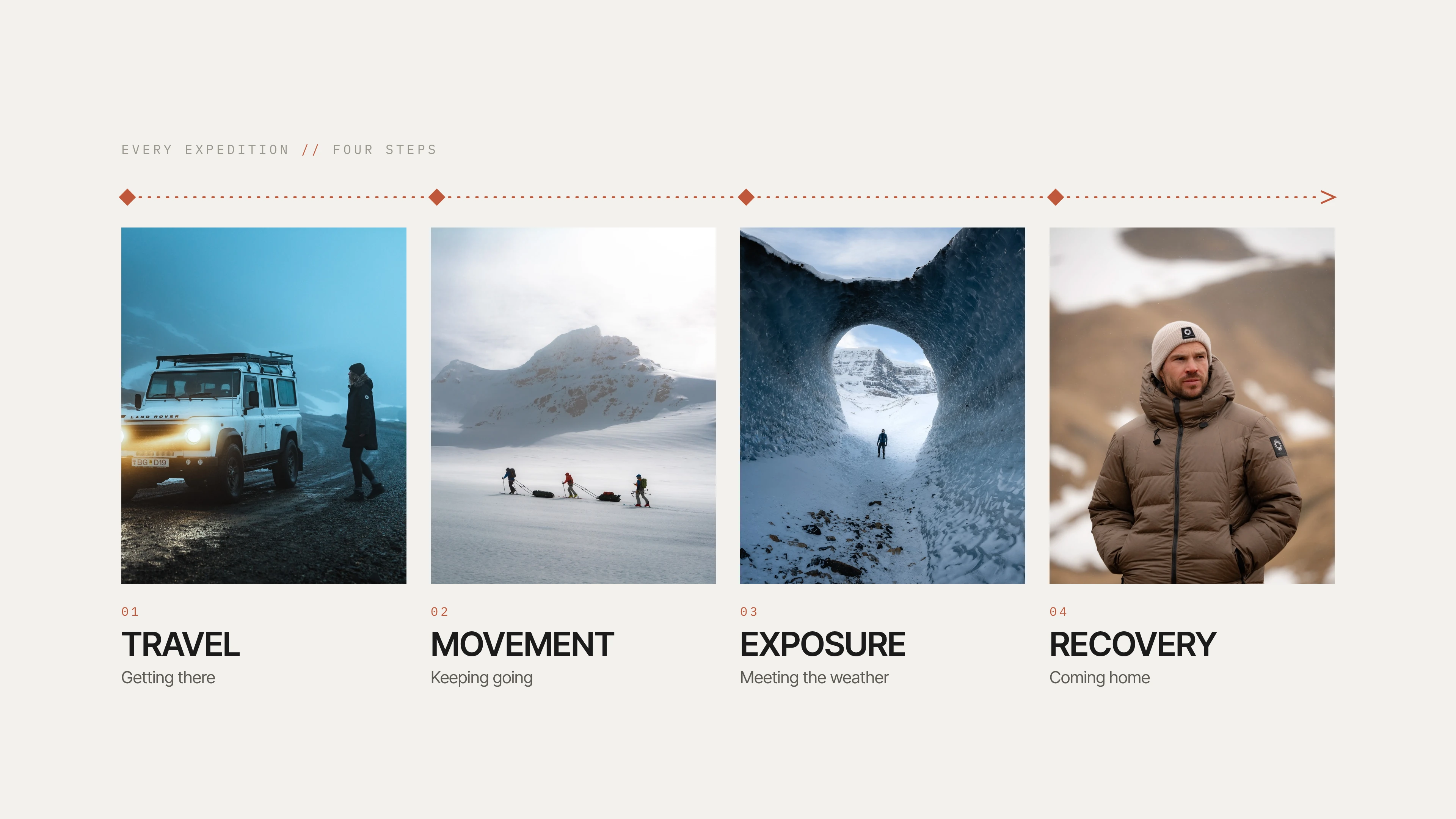
A range needs a map before it needs more products.
A pulk suit and a cashmere sweater can both be Shackleton. Without a system, that range read as uncertainty. The work is to find the logic that holds a range together, then make every brief, price and launch follow it.
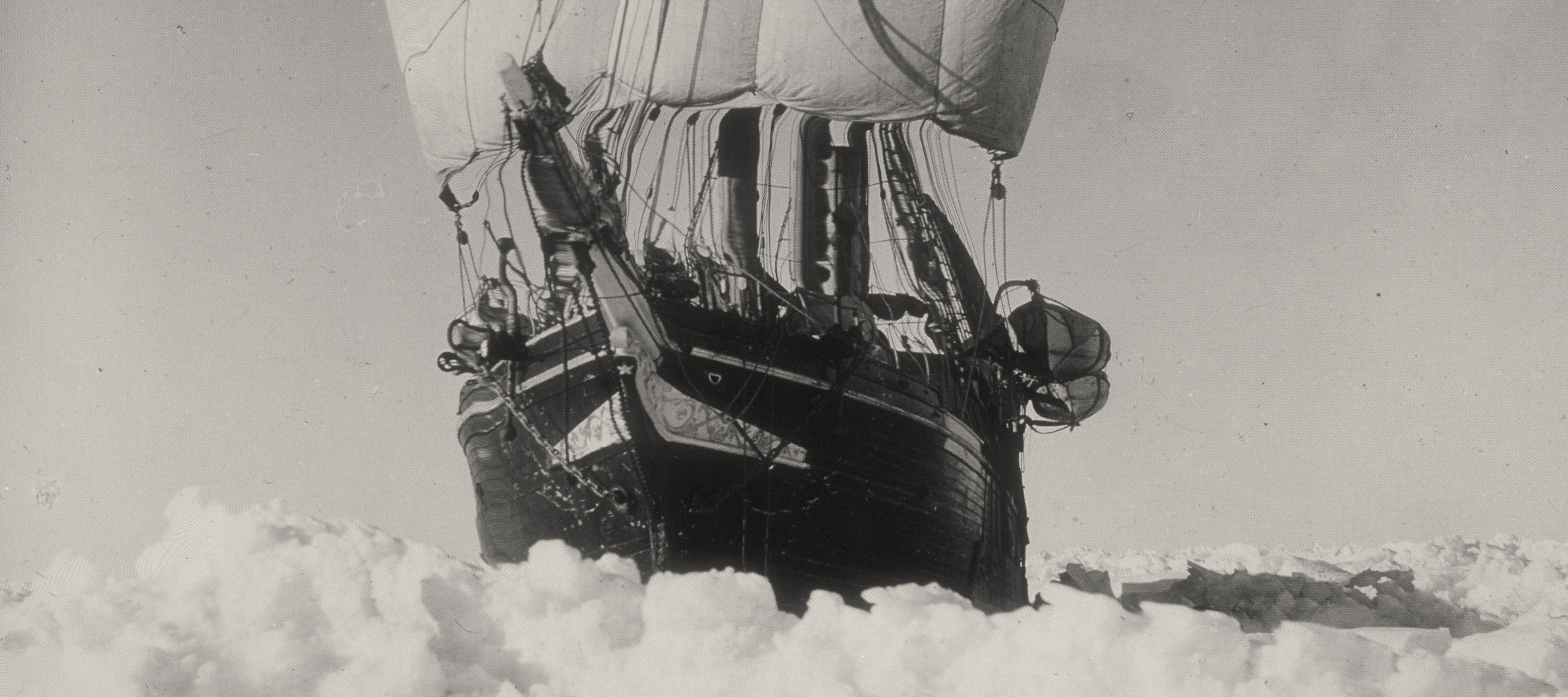
Compete where you can own the ground.
The rest of the industry organises by sport, where Arc'teryx, Norrøna and Rab already lead. Shackleton's Exploration System organises by the explorer's journey instead: Travel, Movement, Exposure and Recovery. The brand now names it as its product architecture.

Show it working, not on a hang tag.
Shackleton's first active insulation took three years to develop with athletes in five countries. The launch had to prove that in use, so the jacket was shot moving hard across five locations in forty-eight hours.

Collaborations need a framework.
Shackleton is expedition apparel partner to Defender's Dakar Rally team. For the second year, Base Camp built a framework across product, experiences, marketing and North America, wrote the briefs for the Defender collaboration and produced the desert field test.
Who we build for.
- Outdoor and expedition apparel. Range architecture, pricing and briefs, from the first strategy to the next season's line-up. Shackleton.
- Brands launching a new category. The product positioned before the campaign, so the launch has something true to say. Made to Move.
- Partnerships and collaborations. Frameworks and briefs that make a co-branded range worth doing. Shackleton × Defender.
- Makers selling to specialists. Product structure and naming that help buyers find the right thing. Polish Interior.
Strategy
- Product strategy
- Competitive mapping
- Range architecture
(01)
Range
- Range planning
- Pricing approach
- Product lifecycle and gates
(02)
Briefs
- Seasonal product briefs
- Collaboration briefs
- Naming and product language
(03)
Go-to-market
- Launch planning
- Retail and content thinking
- Product storytelling
(04)
Map the range
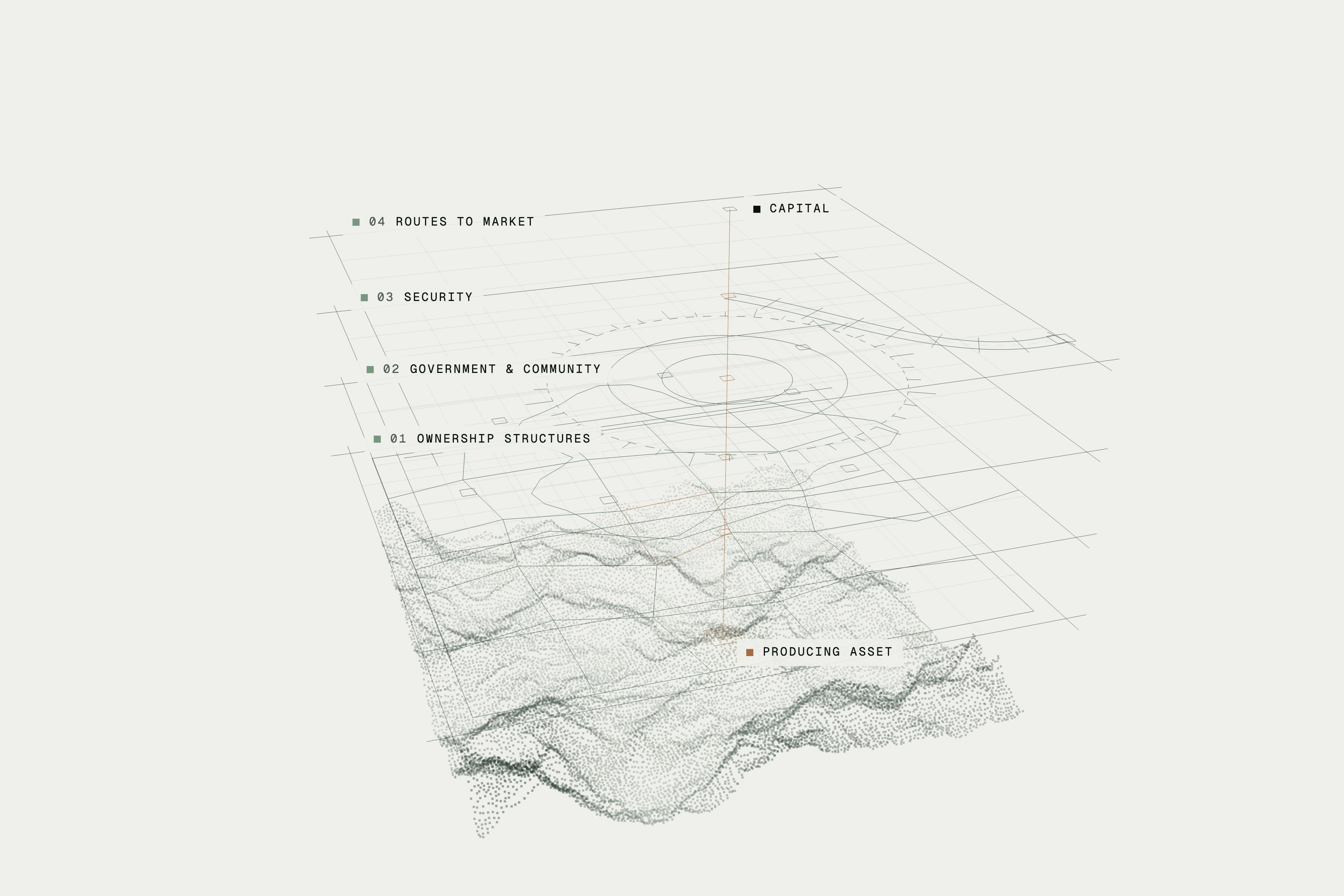
Every product scored on one model, then a map of where to compete and where to own. For Shackleton, that map became the Exploration System.
Set the architecture
Systems, pillars, pricing and a product lifecycle the whole business can work to. Shackleton's lifecycle runs to thirteen gates.
Brief and launch
Seasonal briefs written by system, then the retail, content and campaign thinking built on the same structure. Shackleton's fifteen AW27 briefs were written this way.
Selected work.
Product thinking in other projects.



Inside the team, not beside it.
Strategy that stays in a deck doesn't change a range. With Shackleton, Base Camp wrote the roadmap, then joined the team as product strategy lead to see it through: the architecture, the briefs and the 2028 range proposals.
That's how we prefer to work on product. A defined strategy project first, then time inside the business while the decisions get made, so the system gets used rather than admired.
Product strategy is often confidential, so our case studies show the shape of the work and what it led to, not the client's numbers or roadmap.
Questions people ask.
What is product strategy?
Deciding what a brand makes and why: which categories to compete in, how the products relate to each other, how they're priced and when they launch. It sits between the brand and the product briefs.
Do you only work with apparel brands?
Most of our product work is in outdoor and expedition apparel, with Shackleton. The same thinking applies to any brand with a range to organise. For Polish Interior, a maker of steel doors and windows, the door styles take the names of philosophers and a product finder helps architects choose.
Can you write our seasonal briefs?
Yes. For Shackleton we wrote fifteen AW27 briefs by system, then the SS28 briefs and the 2028 range proposals.
Do you work on collaborations?
Yes. For Shackleton and Defender's Dakar Rally team we built a framework across product, experiences, marketing and North America, and wrote the briefs for the Defender collaboration.
How do you work with our product team?
Usually a defined strategy project first, then a period inside the team as product strategy lead. Shackleton's executive team agreed the architecture of its 2028 range in August 2026.
Can we see the work?
Some of it. Product strategy is usually confidential, so the case study shows the structure and the results, not the numbers.
Is the range hard to explain?
Tell us what you make, where it sells and what's coming next. We'll start by mapping what's there.
Charlie reads every brief and replies himself