Shackleton
A roadmap to win for an expedition brand, built around the explorer's journey.
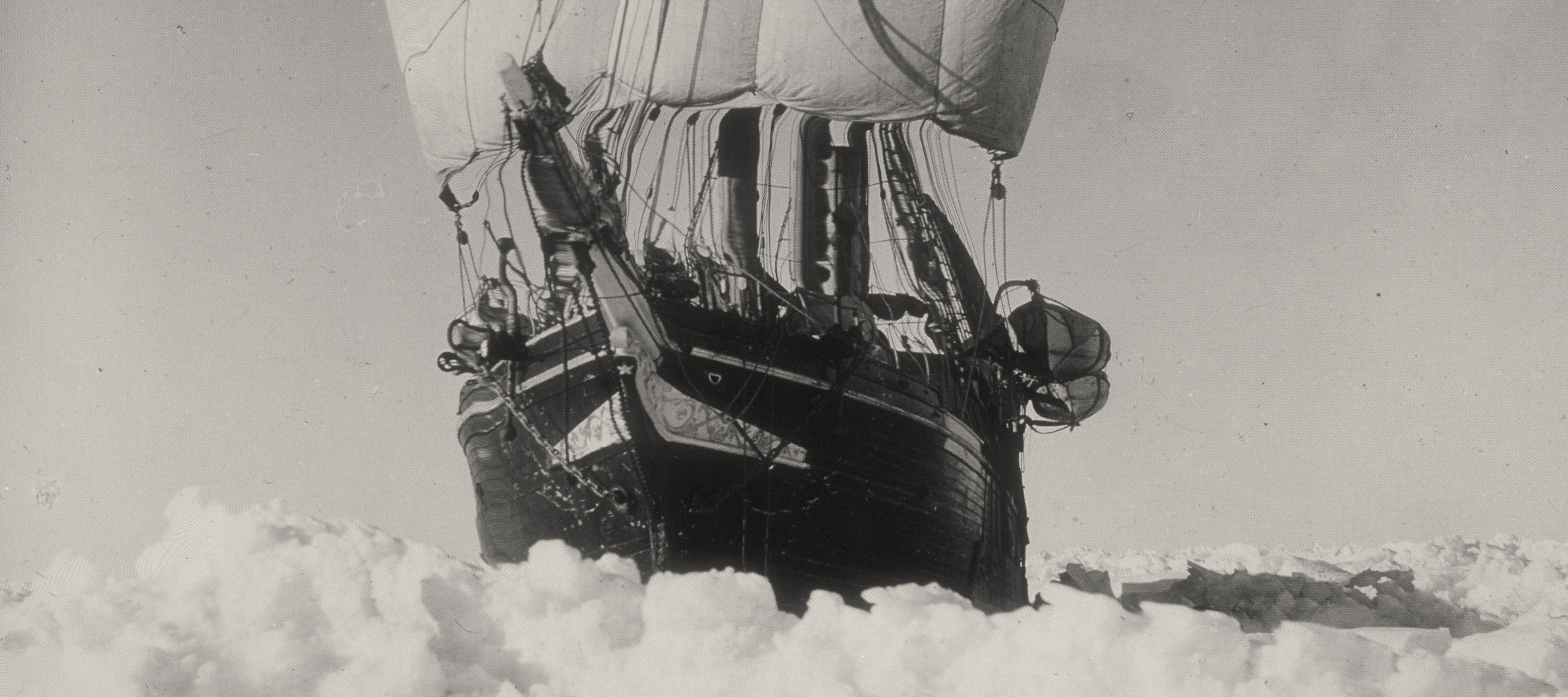
Exploration is a journey, not a category.
Overview
Shackleton makes expedition clothing and runs expeditions from 214 Piccadilly. In 2026 Base Camp wrote it a roadmap to win, then worked inside the business as product strategy lead to see it through: one system for what Shackleton makes, how it sells it and how it's told.
Outcome
Adopted as Shackleton's product architecture, and built into every brief from AW27 to the 2028 range.
Challenge
A pulk suit and a cashmere sweater can both be Shackleton. Without a map, that range read as uncertainty rather than breadth.
The rest of the industry organises by sport, where Arc'teryx, Norrøna and Rab already own the ground. Shackleton couldn't out-range them, and didn't need to.


Role
Base Camp wrote Shackleton a roadmap to win, then joined the team as its product strategy lead to see it through.
- The Exploration System and its three pillars, from first concept to adoption as the product architecture.
- Product OS: the whole range scored on one model, and a map of where to compete and where to own.
- Product architecture and a pricing approach.
- A thirteen-gate product lifecycle.
- AW27 and SS28 briefs, and the 2028 product proposals.
- Retail, content and campaign thinking built on the same system.
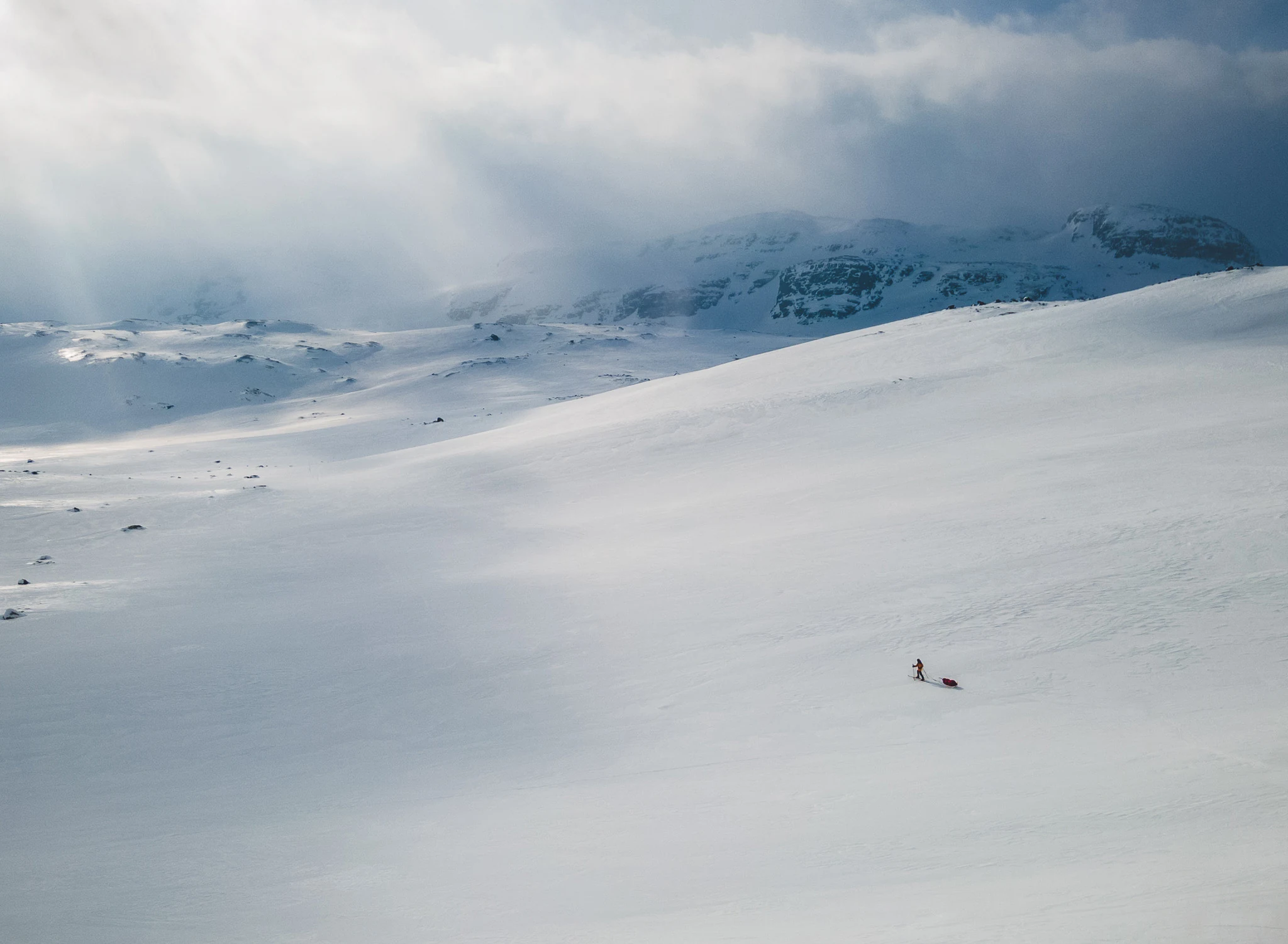
A homecoming, not a summit
The insight came from the name on the door. Shackleton's defining achievement on Endurance wasn't reaching anywhere. It was bringing every man home.
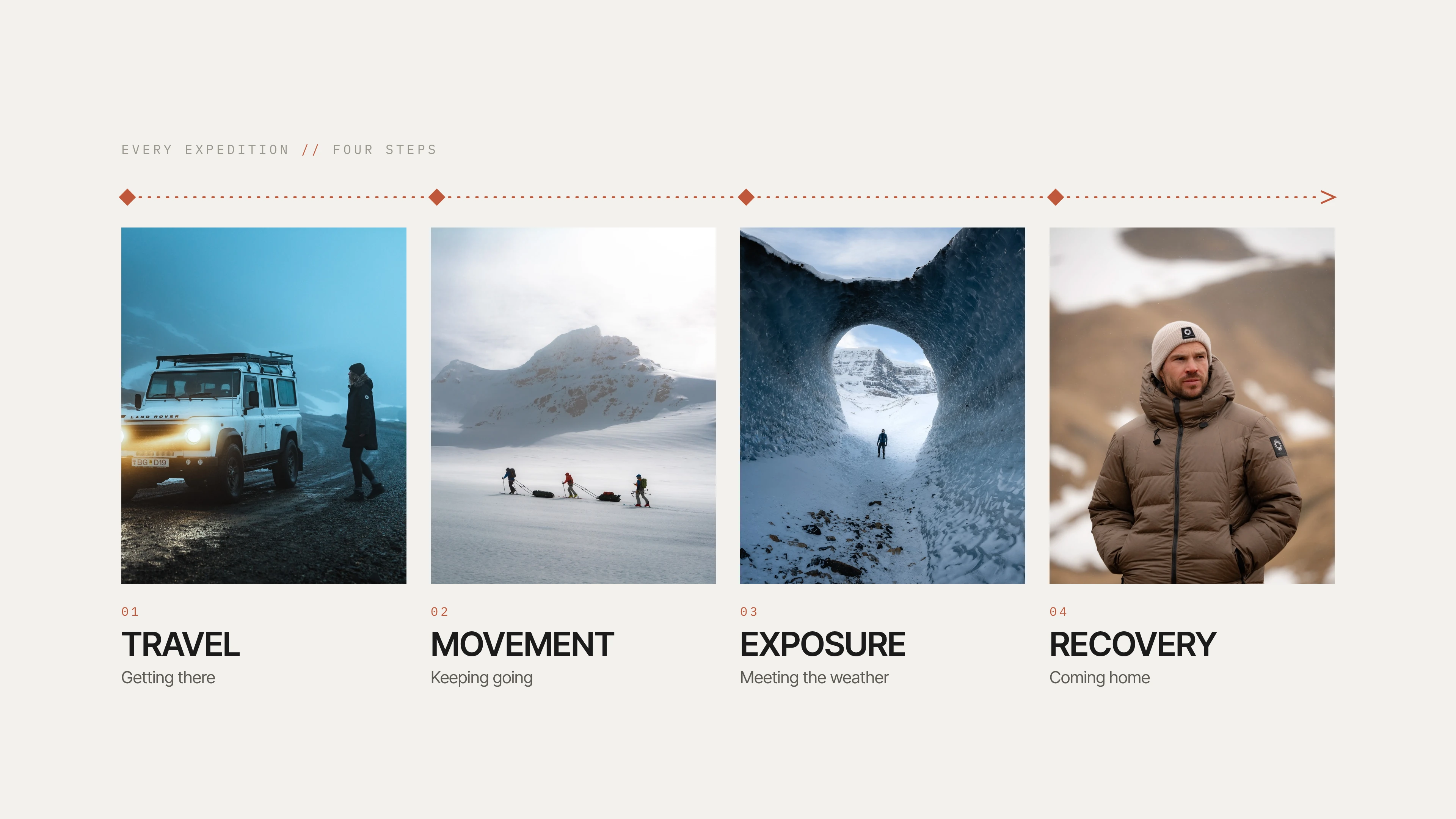
Every expedition, in 1915 or today, follows the same four steps: getting there, keeping going, meeting the weather and coming home. Recovery is part of the expedition, not the end of it.
Every step has its kit
Map the steps and the range follows. Each step has its own kit, so every product starts with one question: where on the journey does it belong?
The journey is the architecture
That question became the product architecture: the journey across, and the job a product does down, from technical credibility to the commercial core to the way in. A pulk suit and a cashmere sweater now sit on one map. Three pillars, Courage, Capability and Care, tie it to Shackleton's purpose: Live Courageously.
Know the range, find the gap
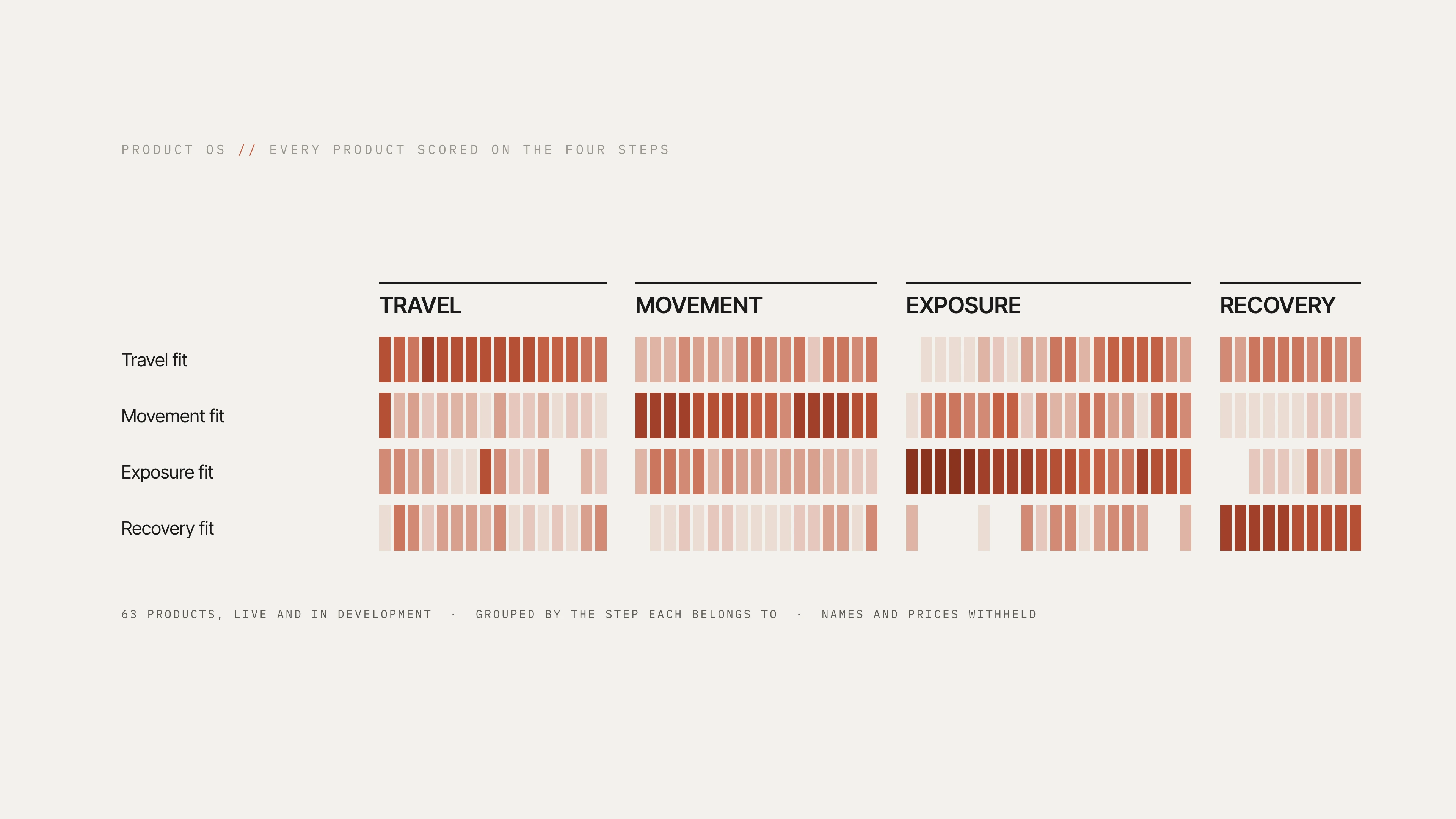
Product OS scored the whole range on the four steps, and showed where it was crowded and where it had gaps.
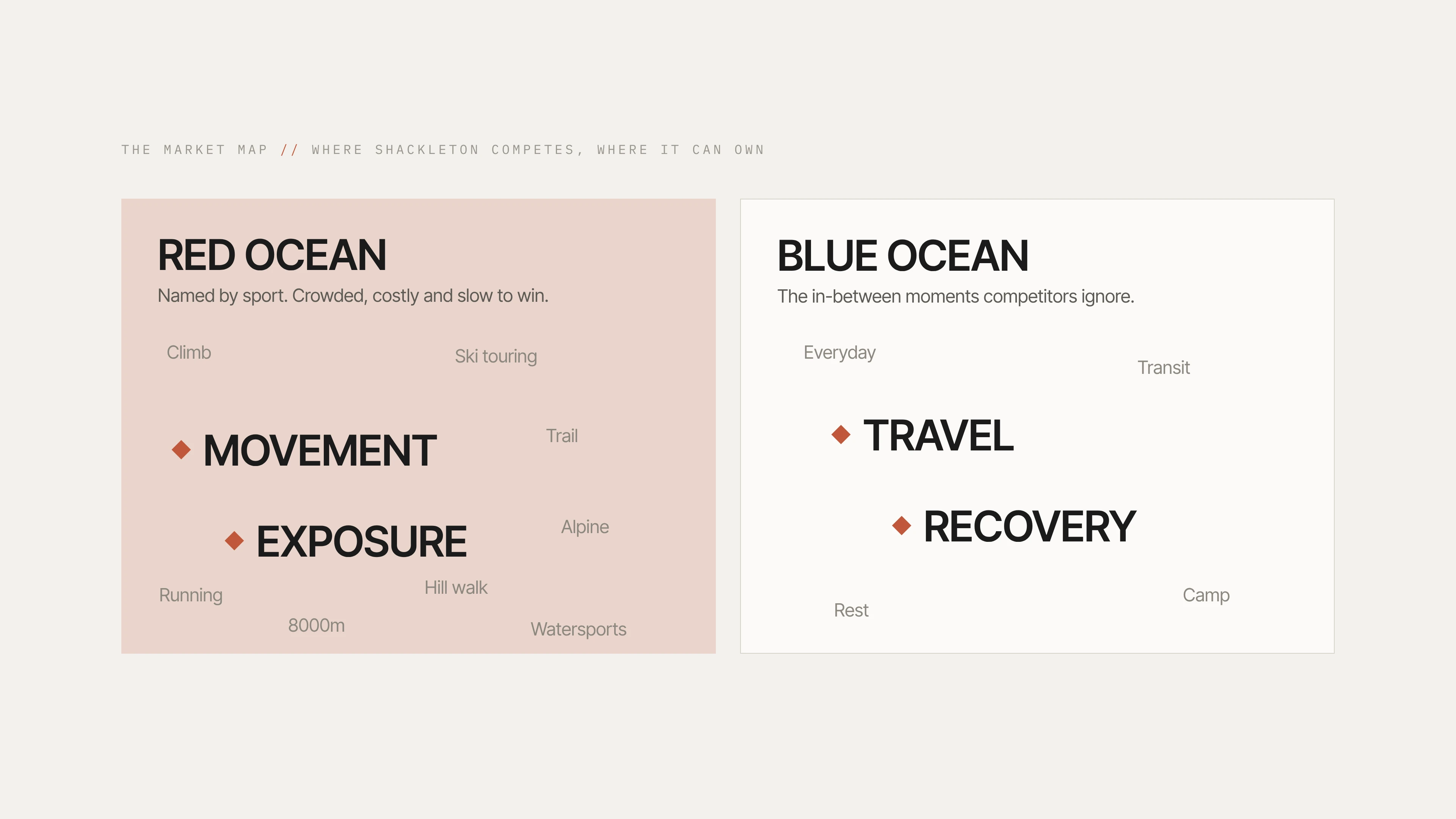
The market map showed the same thing outside. Competitors fight over Movement and Exposure, sport by sport. Travel and Recovery are largely unclaimed, and that is where Shackleton can lead.
One system, every team
The system was built to run the business, not only the range. The master document sets out how it zones the shop floor, gives outfitters four questions instead of a sport, briefs every shoot and sits above the site's categories.
A roadmap to win
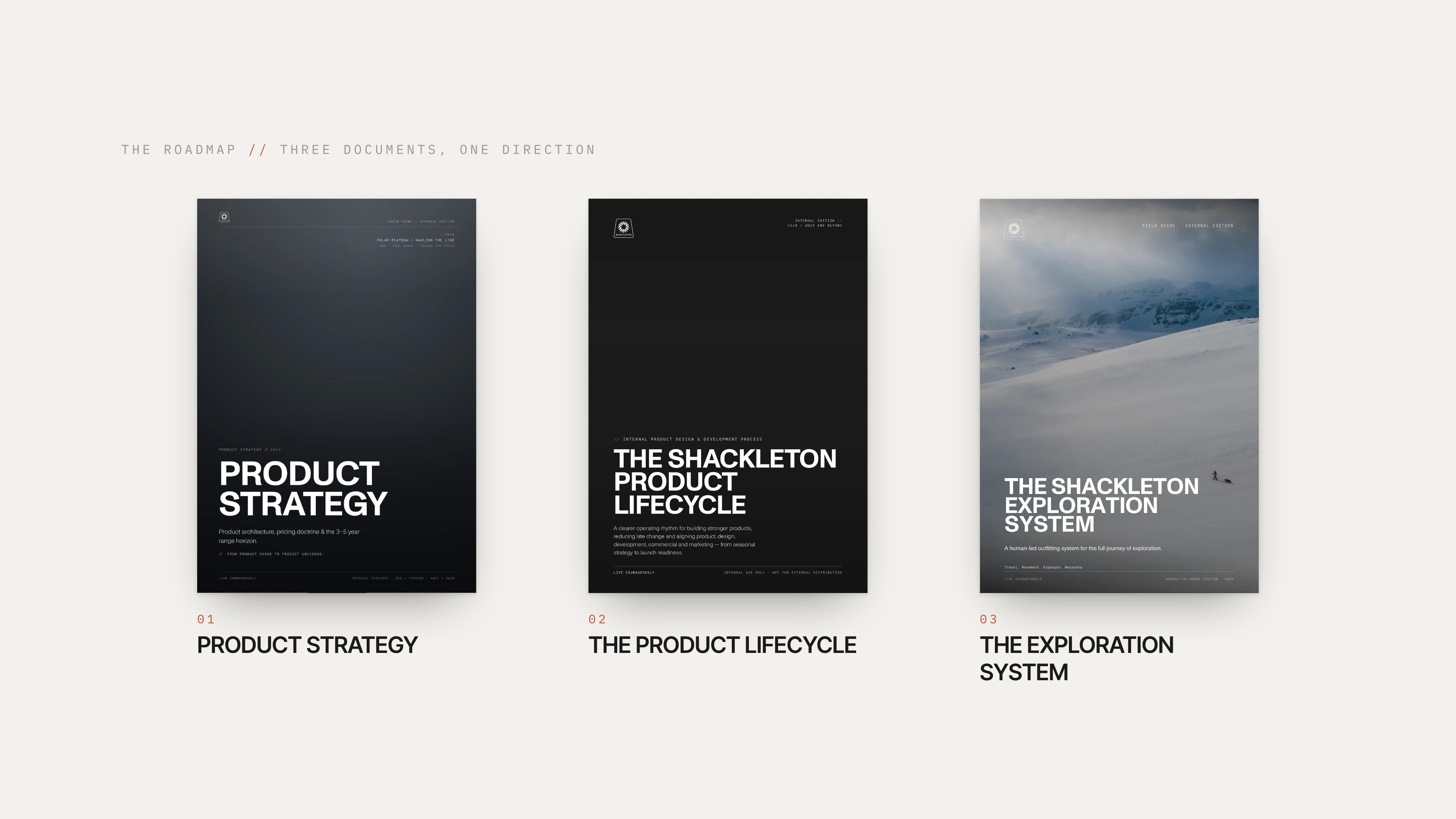
Product strategy, the product lifecycle and the Exploration System were written as one roadmap: what to make, how to decide and how to tell it, out to 2028, with Product OS, pricing, naming and the season briefs alongside. Base Camp then worked inside the team to put it to work.
Into the field
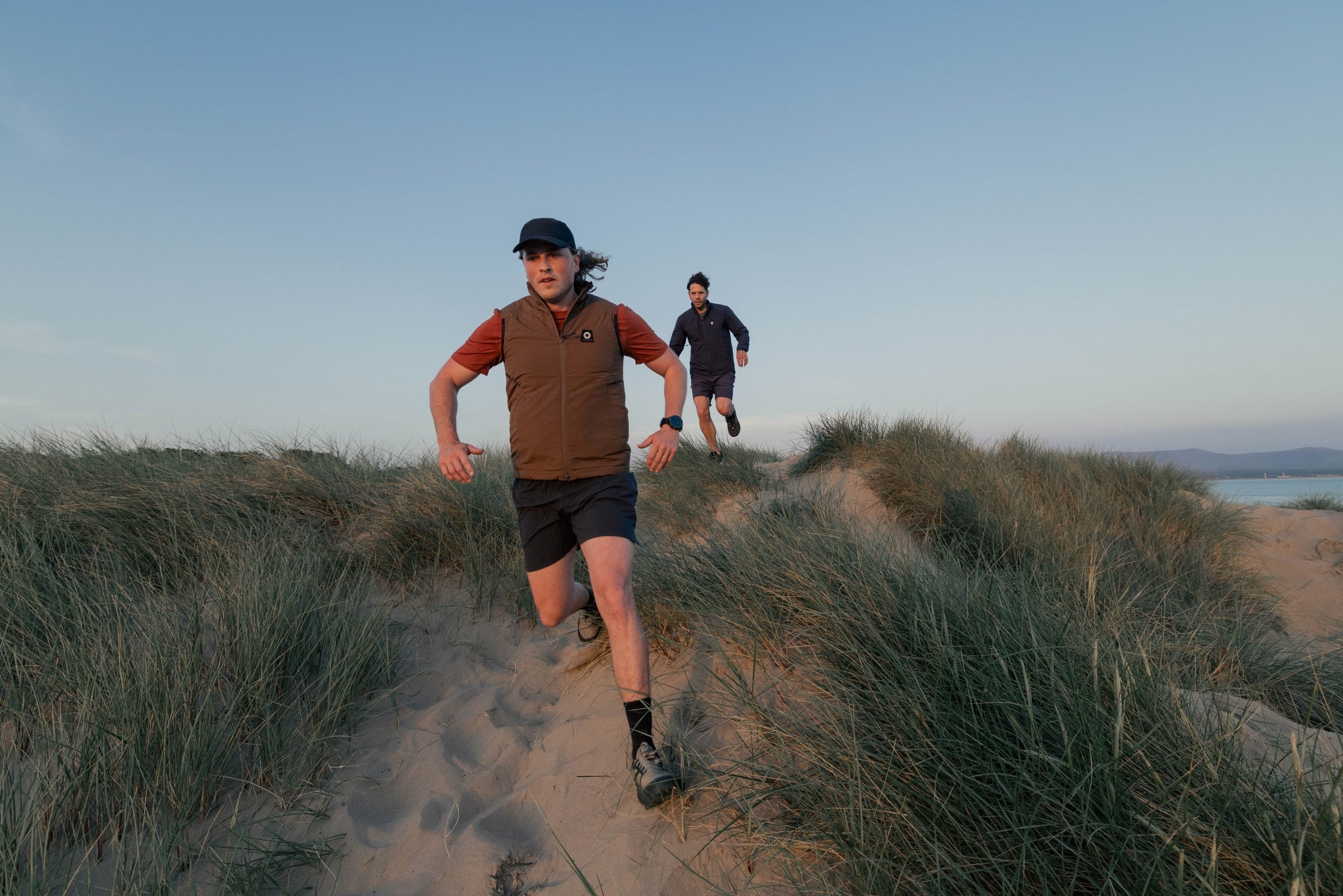
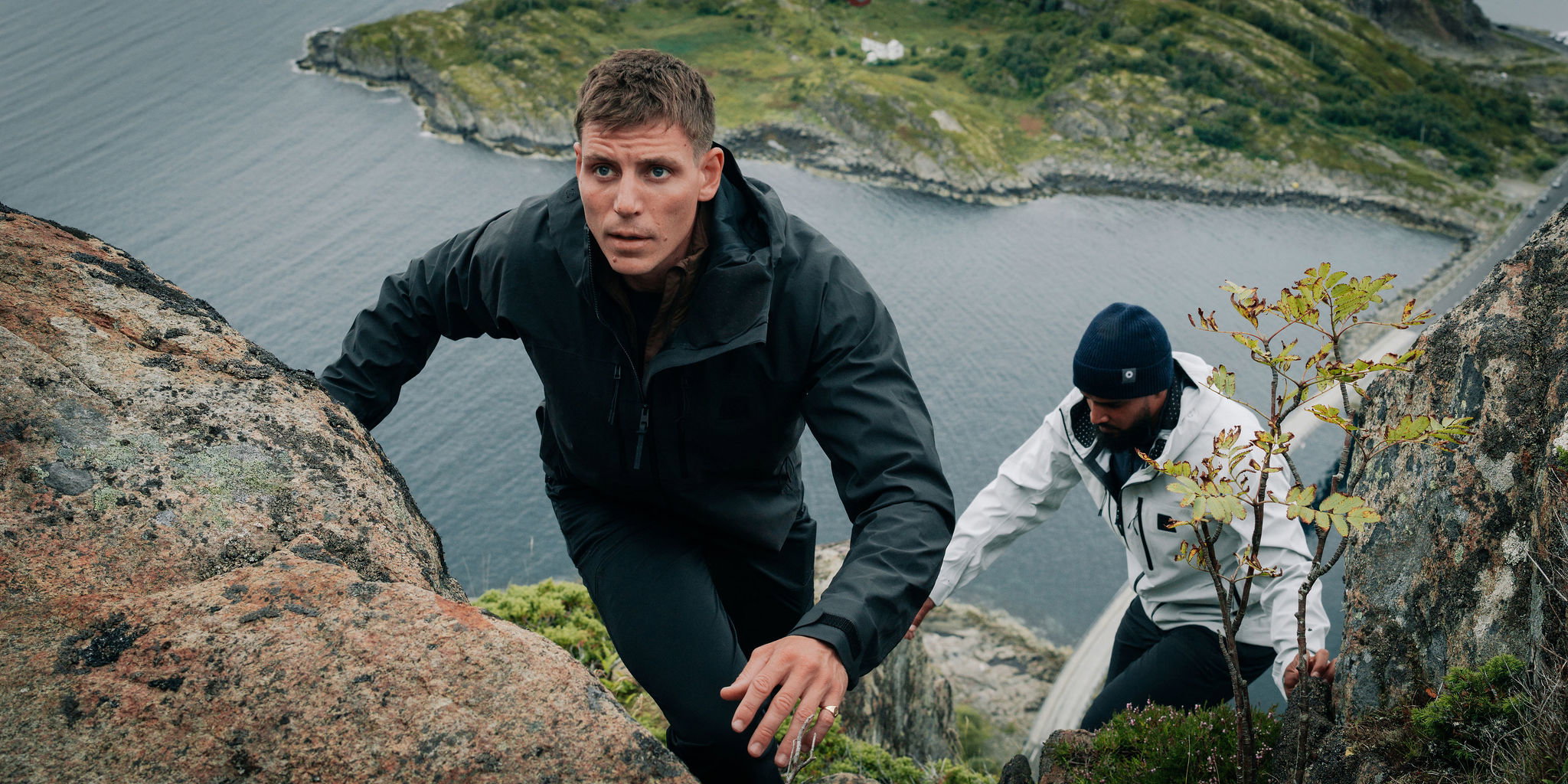
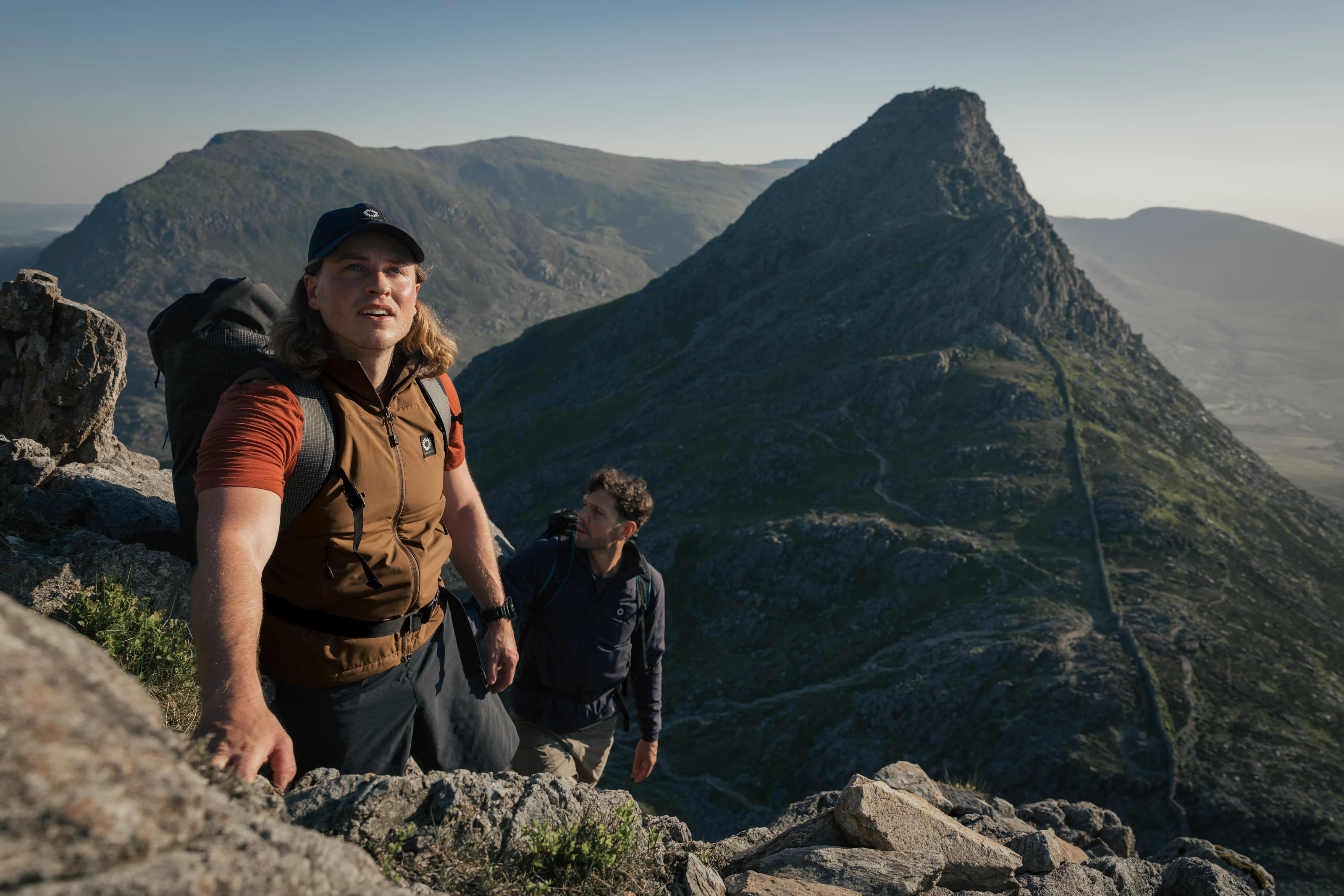
The journey holds well beyond the poles, as the Morocco field test showed. It also briefed the campaigns: Made to Move shot active insulation over forty-eight hours in North Wales, on the hottest May day on record, and Built for More took the autumn range to Lofoten.

01 — Challenge
A pulk suit and a cashmere sweater can both be Shackleton. Without a map, that range read as uncertainty rather than breadth.
The rest of the industry organises by sport, where Arc'teryx, Norrøna and Rab already own the ground. Shackleton couldn't out-range them, and didn't need to.
02 — Role
Base Camp wrote Shackleton a roadmap to win, then joined the team as its product strategy lead to see it through.
- The Exploration System and its three pillars, from first concept to adoption as the product architecture.
- Product OS: the whole range scored on one model, and a map of where to compete and where to own.
- Product architecture and a pricing approach.
- A thirteen-gate product lifecycle.
- AW27 and SS28 briefs, and the 2028 product proposals.
- Retail, content and campaign thinking built on the same system.
03 — Approach
Four systems, Travel, Movement, Exposure and Recovery, held together by three pillars, Courage, Capability and Care, and designed to work across product, retail, content and channels.
Identity
04 — Outcome
Shackleton's own brand on a page now names the Exploration System as its product architecture. Co-founder and CEO Martin Brooks called it “a coherent and differentiated foundation”, and the work that followed was built on it: fifteen AW27 briefs written by system, the SS28 briefs, and a 2028 range whose architecture the executive team agreed in August 2026. The master document sets out how product, pricing, retail, content and channels follow the system, with a full named launch planned for AW27.
Chairman Chris Shaw, on the first strategy review: “It’s rare I see a real balance of product knowledge, commerciality, strategy.”
Credits

Project Description
Shackleton makes expedition clothing and runs expeditions from 214 Piccadilly. In 2026 Base Camp wrote it a roadmap to win, then worked inside the business as product strategy lead to see it through: one system for what Shackleton makes, how it sells it and how it's told.
Client
Shackleton — The Exploration System
Date
2026
Services
Brand Strategy / Product Strategy / System Design / Creative Direction
Sector
Expedition apparel
The work. What we did, and what it changed.
A pulk suit and a cashmere sweater can both be Shackleton. Without a map, that range read as uncertainty rather than breadth.
The rest of the industry organises by sport, where Arc'teryx, Norrøna and Rab already own the ground. Shackleton couldn't out-range them, and didn't need to.
Base Camp wrote Shackleton a roadmap to win, then joined the team as its product strategy lead to see it through.
- The Exploration System and its three pillars, from first concept to adoption as the product architecture.
- Product OS: the whole range scored on one model, and a map of where to compete and where to own.
- Product architecture and a pricing approach.
- A thirteen-gate product lifecycle.
- AW27 and SS28 briefs, and the 2028 product proposals.
- Retail, content and campaign thinking built on the same system.
Four systems, Travel, Movement, Exposure and Recovery, held together by three pillars, Courage, Capability and Care, and designed to work across product, retail, content and channels.
Shackleton's own brand on a page now names the Exploration System as its product architecture. Co-founder and CEO Martin Brooks called it “a coherent and differentiated foundation”, and the work that followed was built on it: fifteen AW27 briefs written by system, the SS28 briefs, and a 2028 range whose architecture the executive team agreed in August 2026. The master document sets out how product, pricing, retail, content and channels follow the system, with a full named launch planned for AW27.
Chairman Chris Shaw, on the first strategy review: “It’s rare I see a real balance of product knowledge, commerciality, strategy.”
Exploration is a journey, not a category.
“The work wasn't just about making it look better — it was about building a clearer relationship between product, story and experience.”
Related Work — More from the studio. Selected projects where brand, design, and performance move as one.

Shackleton × Defender — Rally Partnership
Partnership Strategy / Concept / Production / Creative Direction
Shackleton — Made to Move
Campaign Concept / Production / Talent / Creative Direction
66°North — True North
Concept / Film / Photography / Production