Parliamentary Knowledge Foundation
A brand, a public website and a private members’ portal for a foundation that takes MPs and Peers into the field.
The site's job is to make a day in the field easy to say yes to.
Overview
The Parliamentary Knowledge Foundation takes MPs and Peers out of Westminster to see frontline services, industry and nature at first hand. Base Camp worked on its brand, designed and built its Webflow website, and then built the portal members use from the first invitation to the day itself.
Outcome
The website went live in June 2026, and the members’ portal opened to MPs on 21 October for the 2026–27 schemes.
Challenge
PKF needed three things that worked as one: a brand to carry the Foundation, a public site that explained its schemes to the parliamentarians who apply and the organisations that host them, and a private place for members once they were on a scheme.
Schemes, modules and partners change every year, and the team is small. Everything had to stay accurate without rebuilding pages, and nothing could reach an MP before it was right.
Role
- Brand and presentation work for the Parliamentary Knowledge Schemes (2024–25), and the Foundation’s lockups.
- Information architecture and content model for the website: schemes, modules, case studies, events, people and partners.
- Webflow design and build. The site went live in June 2026.
- The members’ portal: product design and UX for four roles, the access model, the link to PKF’s Notion workspace, and the build on PKF’s own domain.
- A portal prototype in July 2026, then the build, an onboarding guide for the team and launch support.
- Ongoing creative support on retainer.
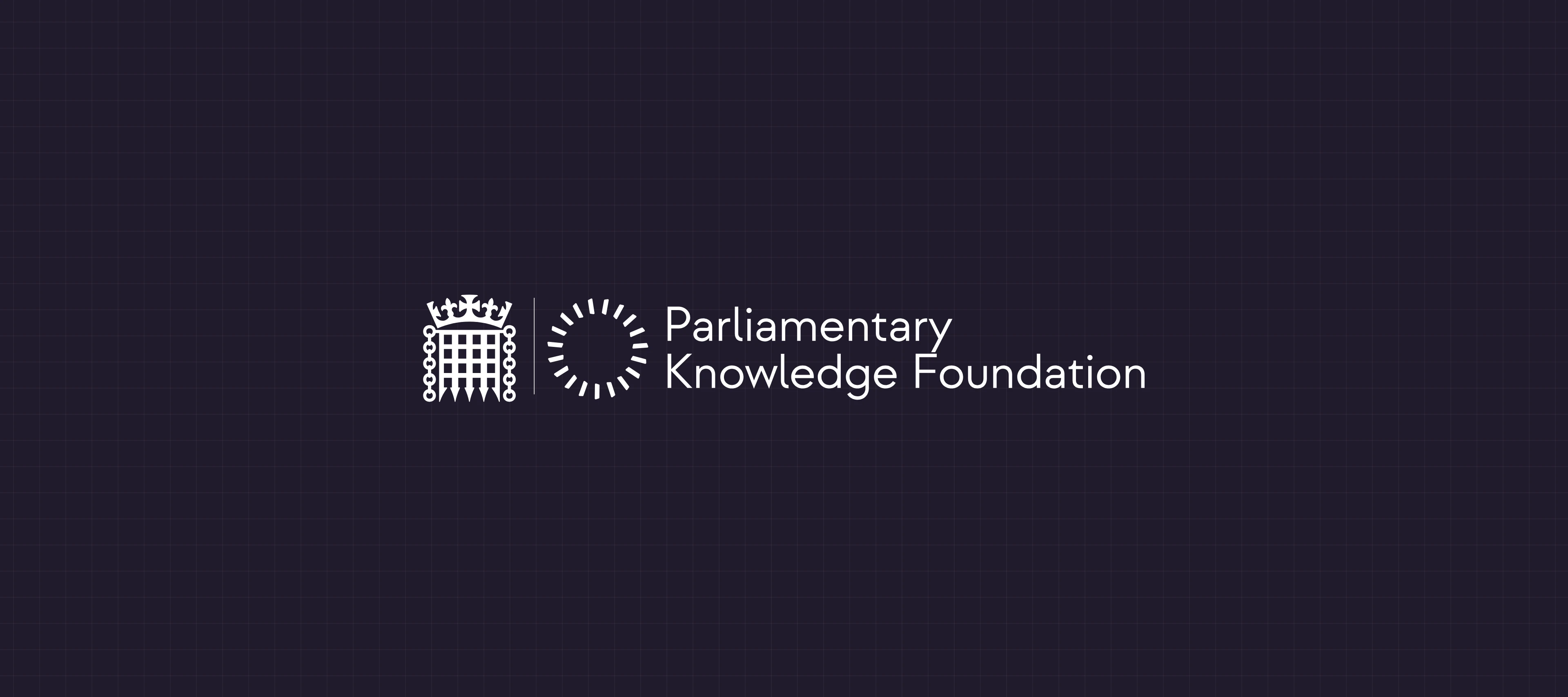
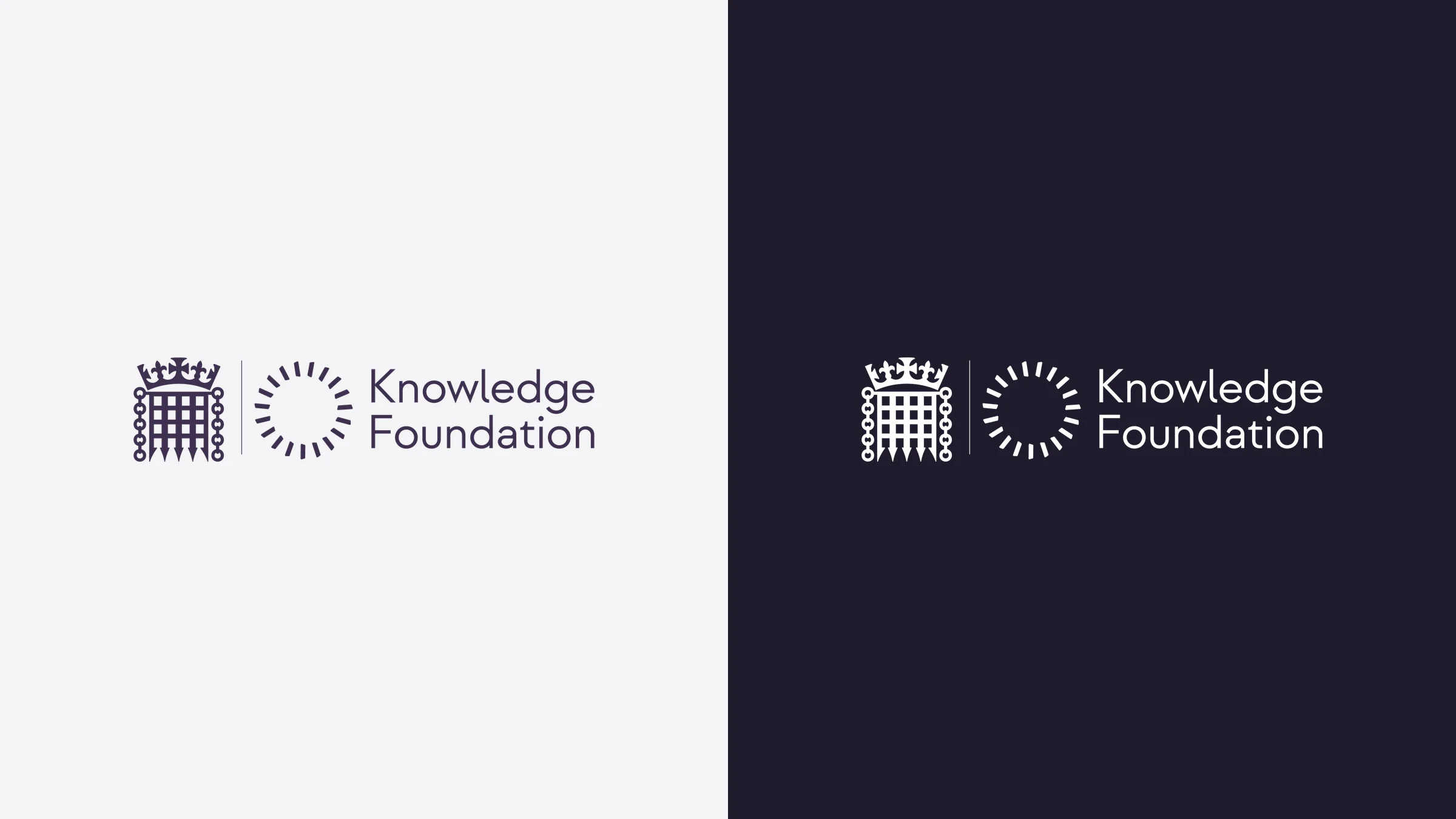
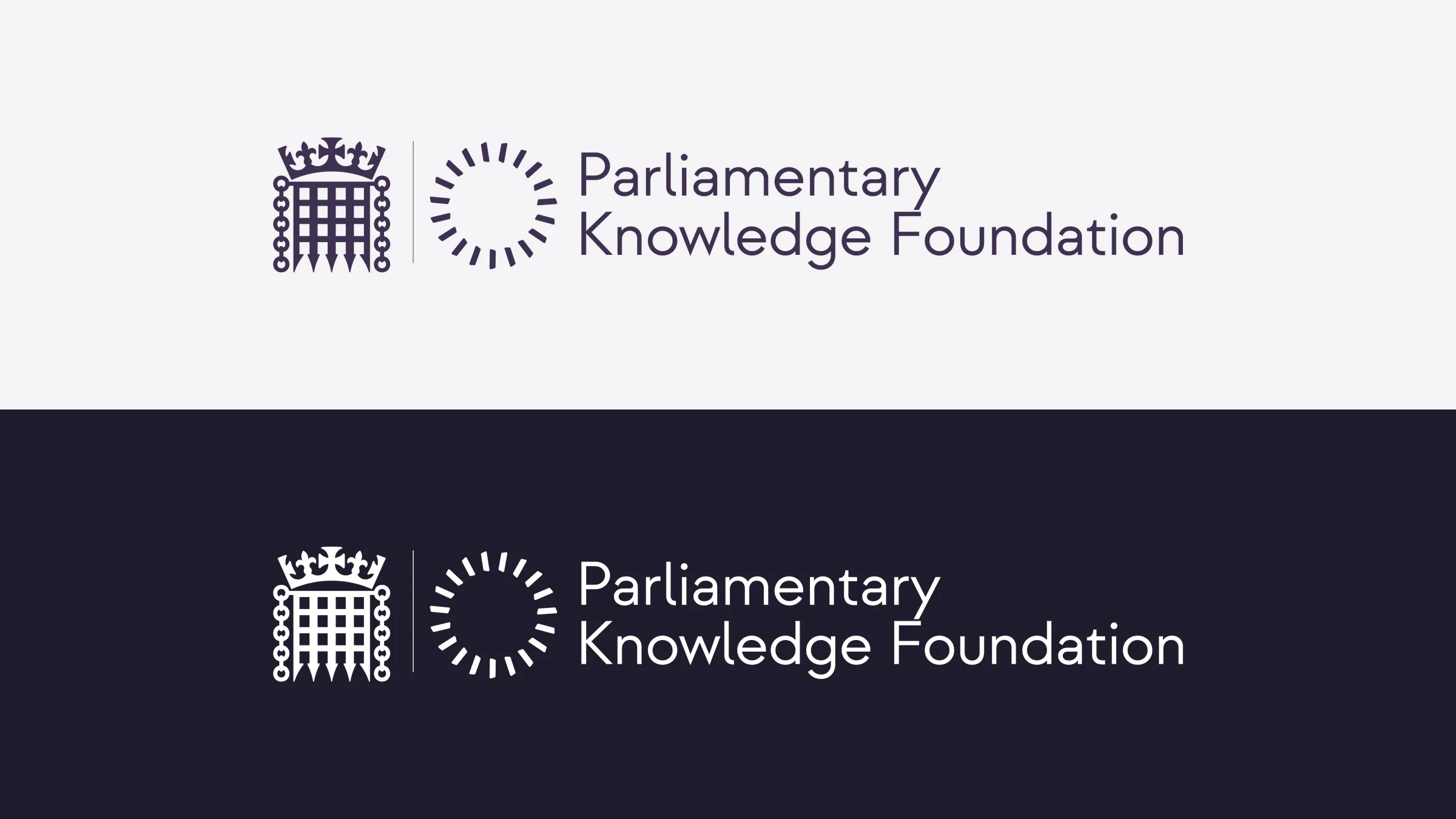
One mark, used whole
The lockup sets the Crowned Portcullis beside the Foundation’s name, in a short and a full version: purple on light grounds, white on the aubergine the site and portal are built on. It is only ever used whole. It fades, moves and scales as one mark, and is never taken apart.
Show, then explain
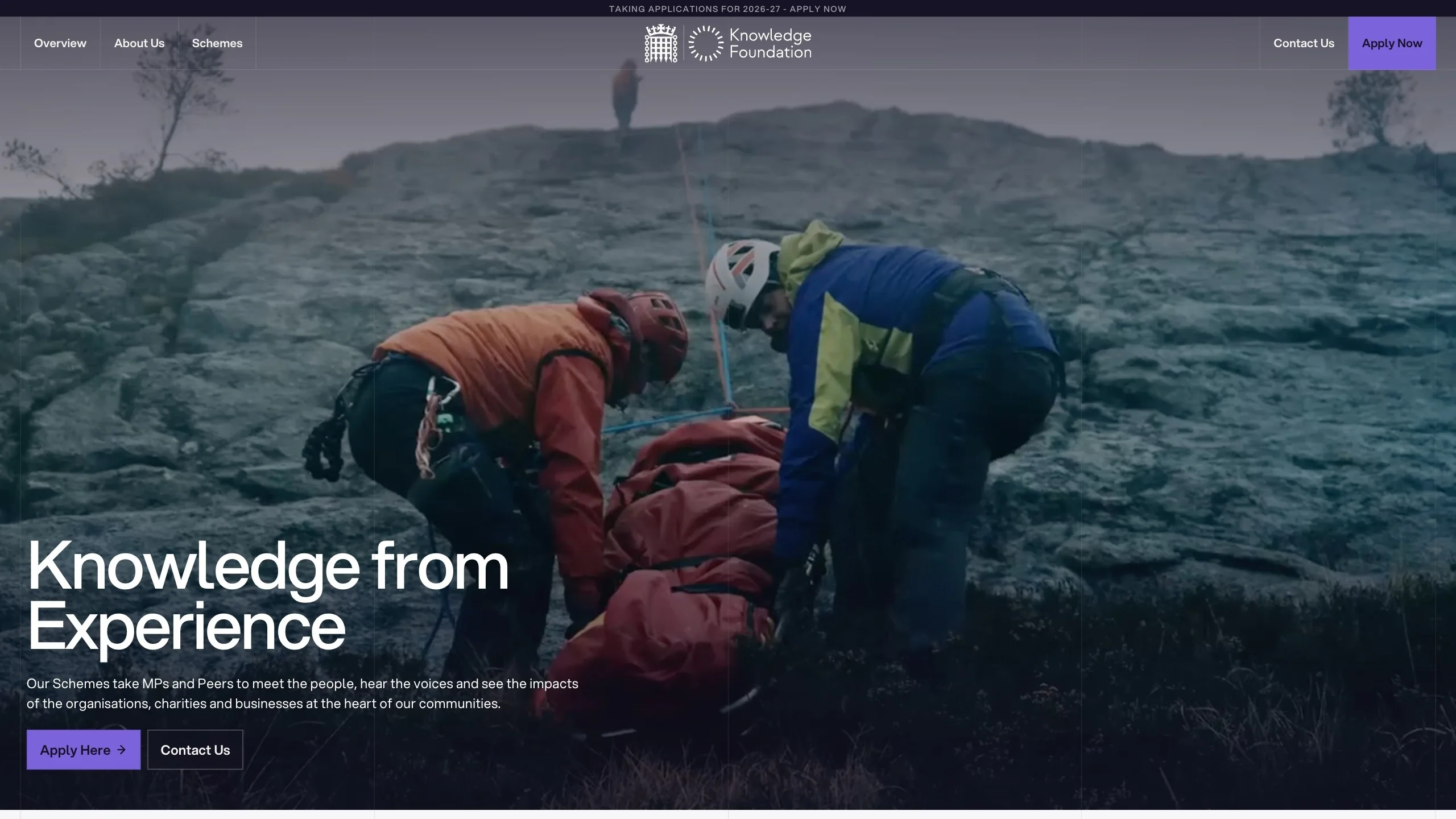
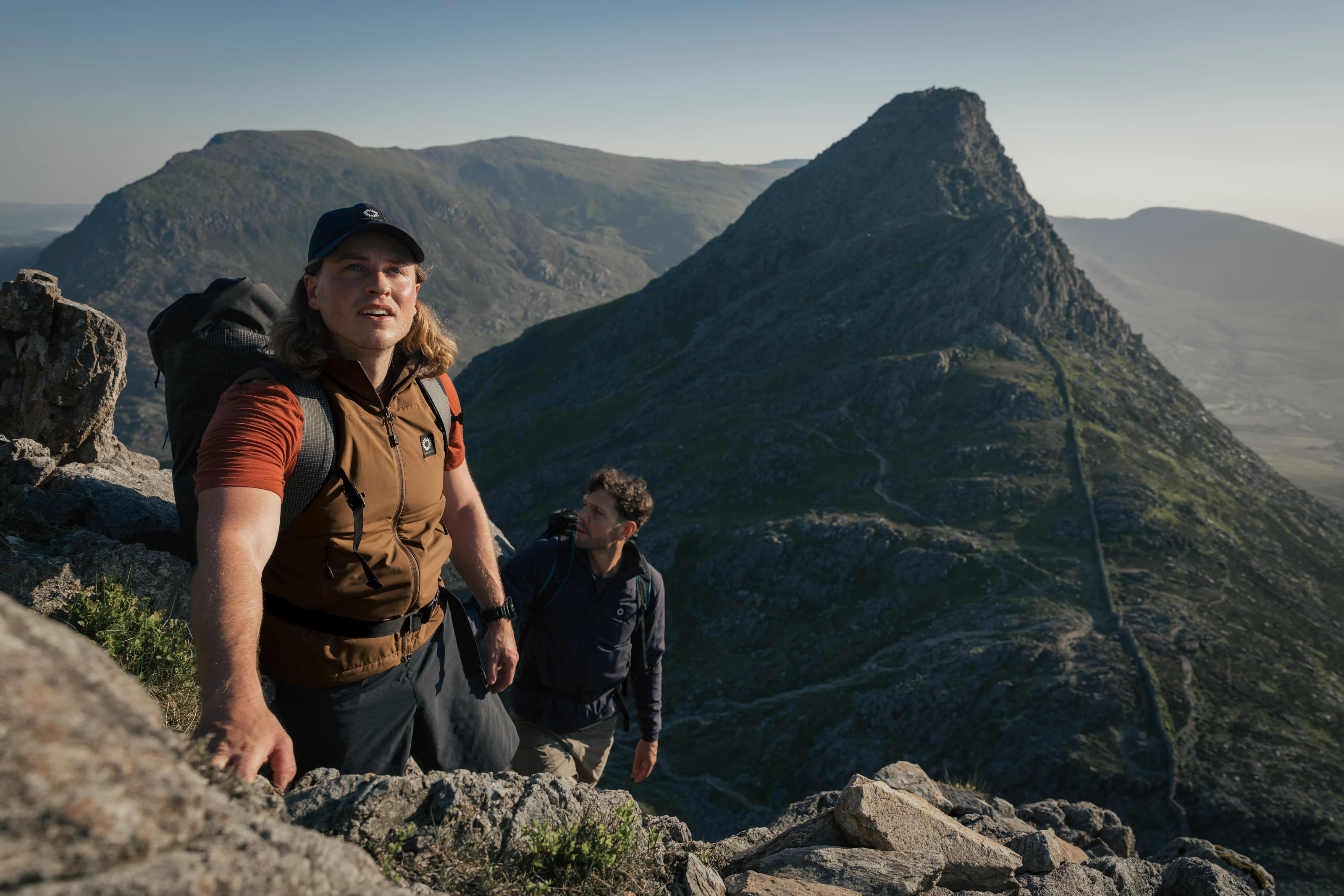
The homepage opens on film of a scheme in the field, a mountain rescue team at work, under one line: Knowledge from Experience. Applications for 2026–27 open from a banner on every page.
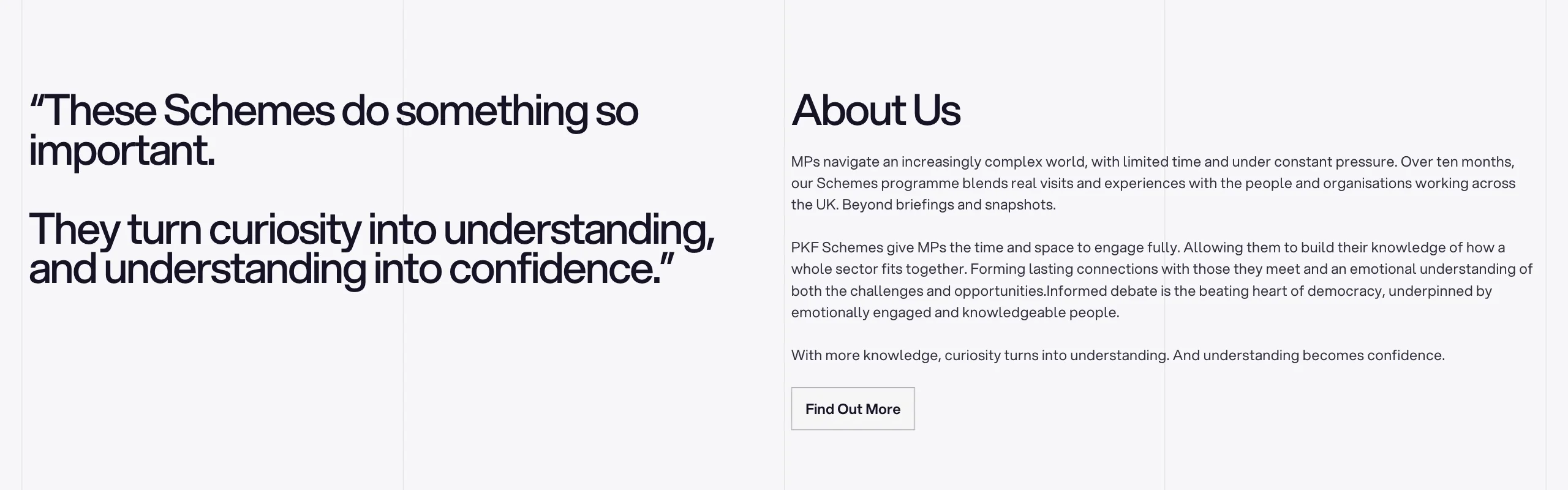
Below the film, a testimonial makes the case before the Foundation describes itself: “These Schemes do something so important.”
Content as collections
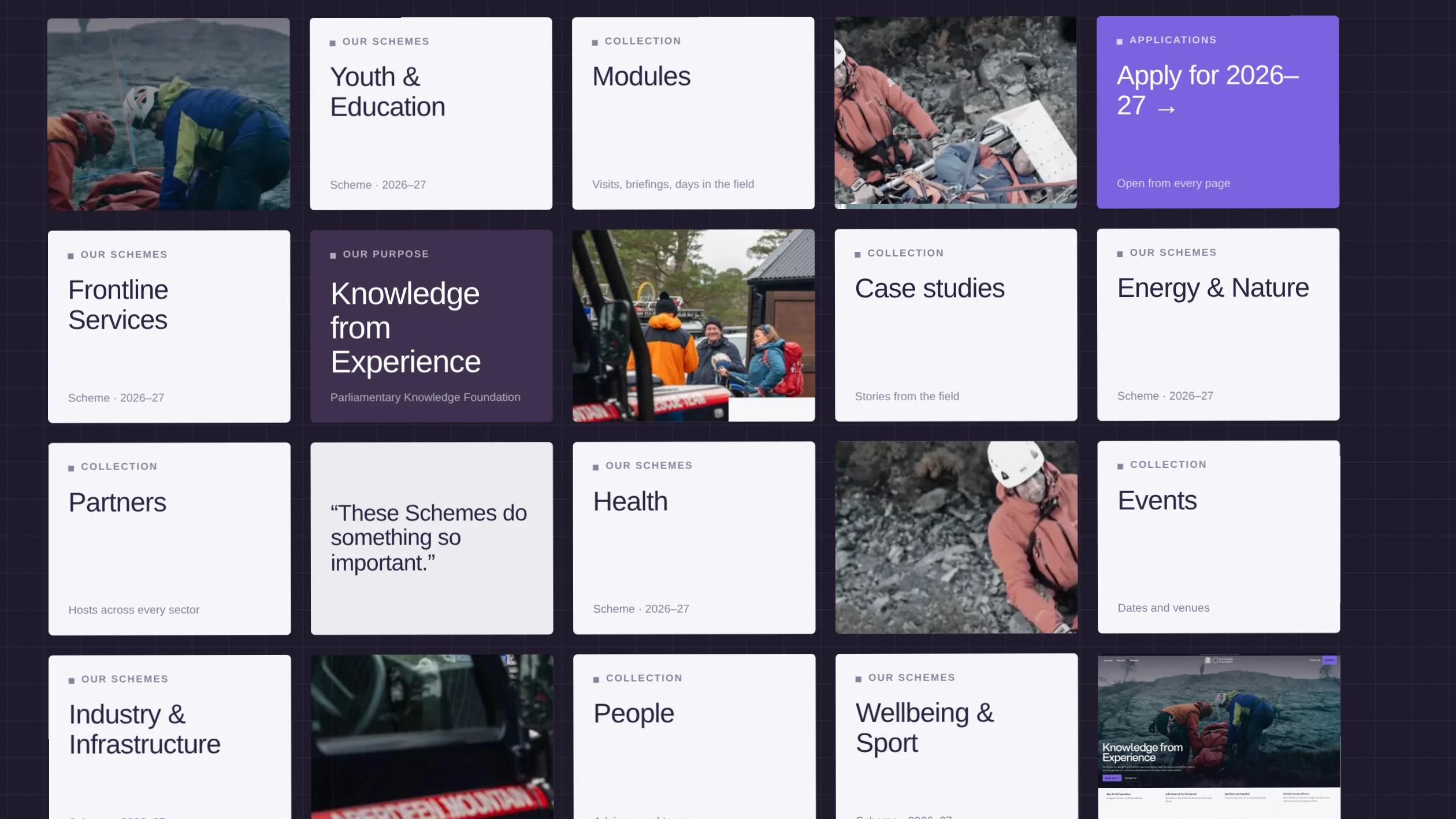
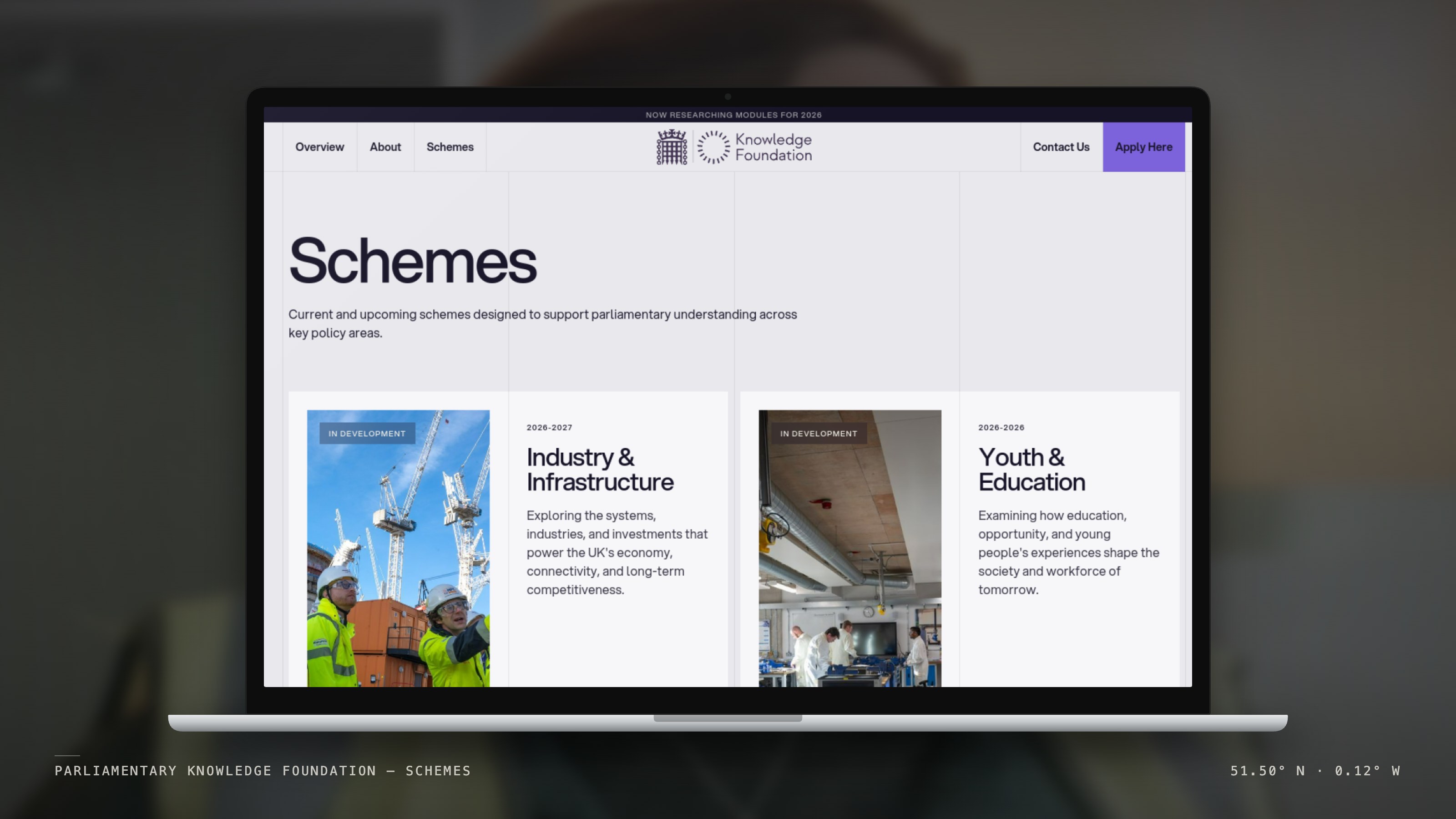
Schemes, modules, case studies, events, people and partners each live in the CMS. A new scheme or partner is a new entry, not a new page, and every scheme page comes from the same template.
A route for each audience
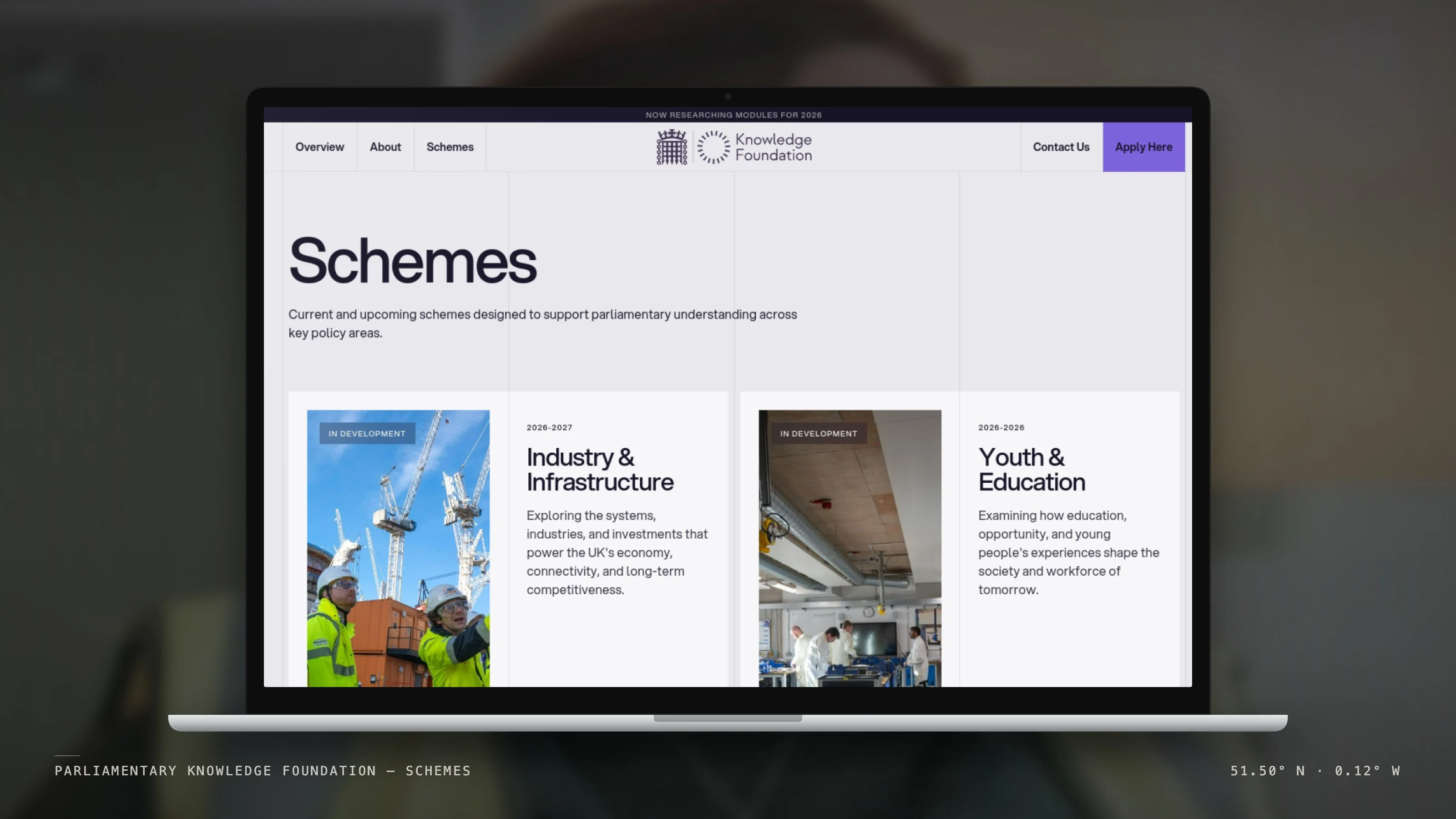
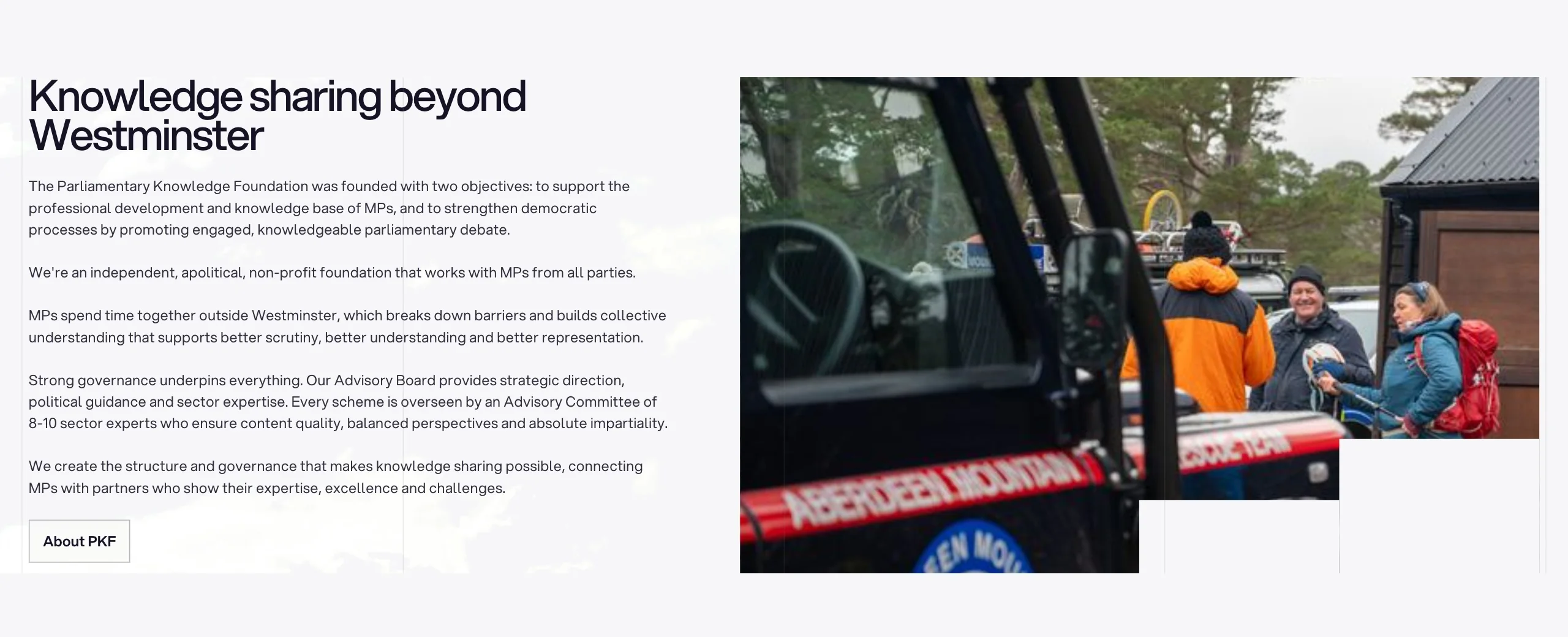
MPs and Peers go to Apply. Organisations that want to host a module have a partner enquiry route of their own. The About pages set out the Foundation’s independence and governance in plain terms, because both audiences ask.
The portal: invitation only
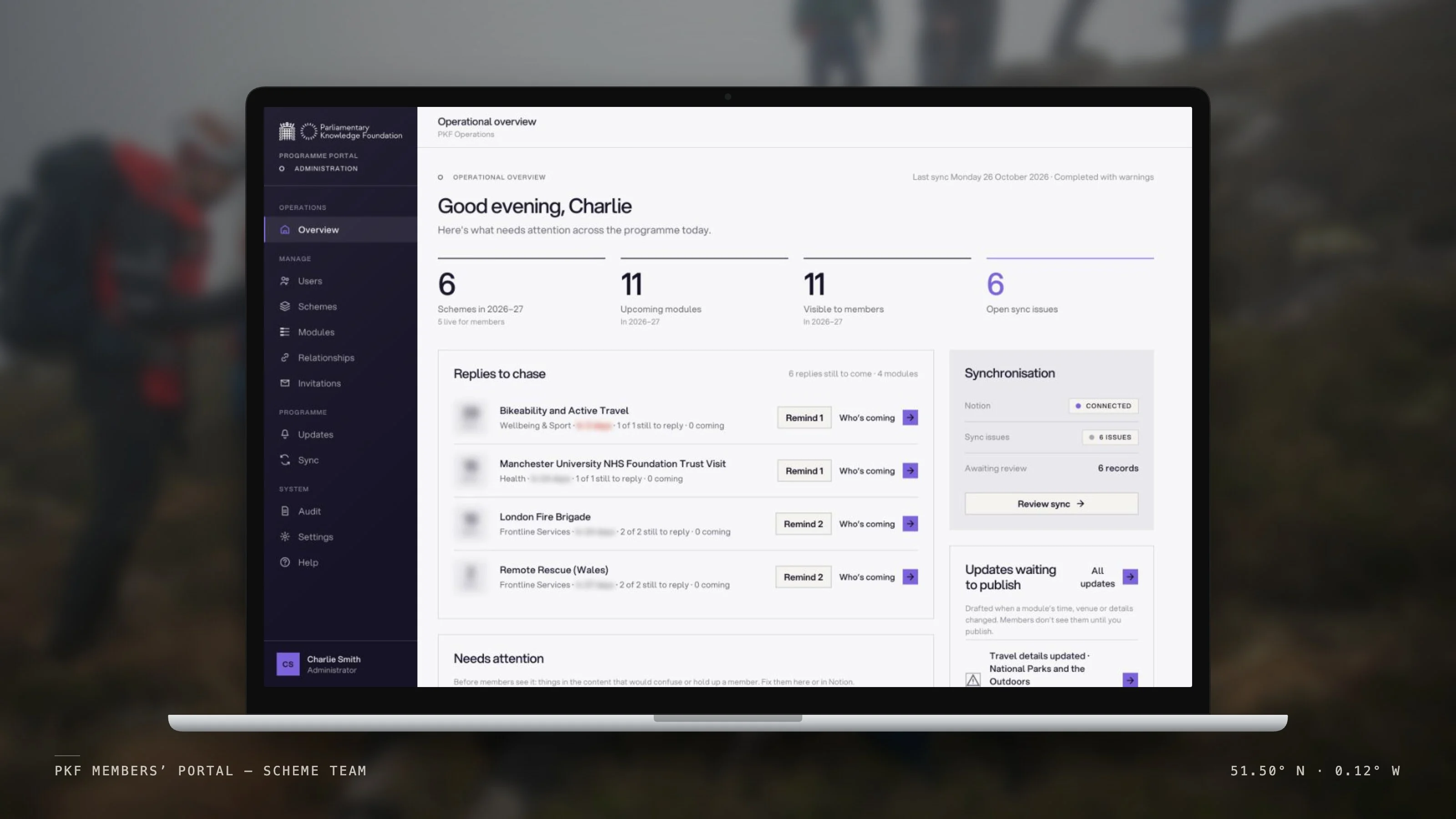
Once members are on a scheme, the details of each day move to a private portal on PKF’s own domain. Nobody can sign up. PKF adds each person, and every sign-in is checked against an approved list of addresses.
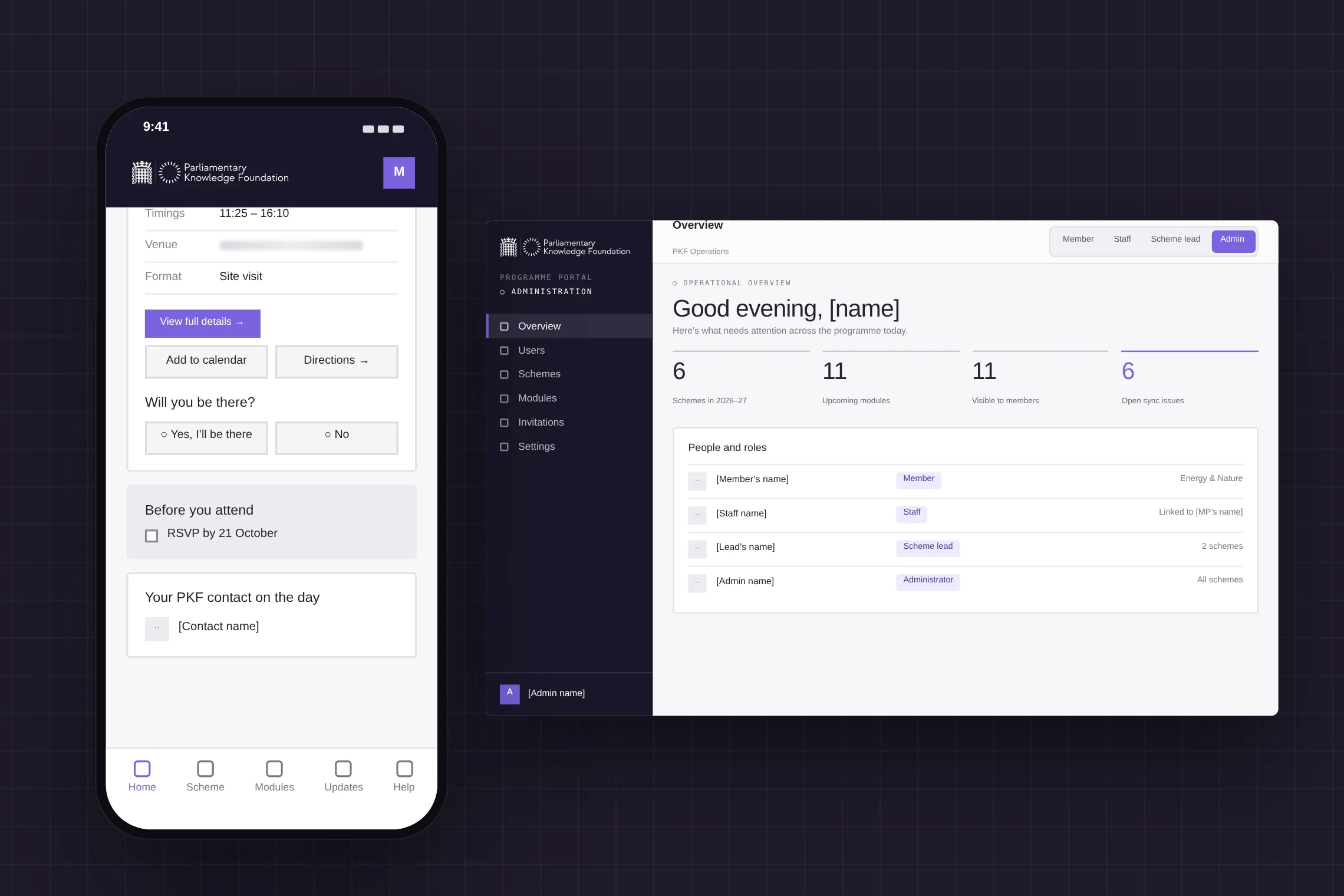
Each role sees only what it should. Members see their own scheme. Parliamentary staff are linked to their MP and can act for them. Scheme leads see and edit only the schemes assigned to them, and two administrators manage people and roles.
A human gate
The portal reads from a publication layer in PKF’s Notion, never from its working databases, so internal notes stay where they are. Content syncs every evening, and changes wait as drafts until someone publishes them, so members get one considered update instead of a stream of edits.
The team can preview exactly what a member, a member’s staff or a scheme lead sees. Previews can’t change anything, so no action is ever recorded against the wrong person.
Built for the day
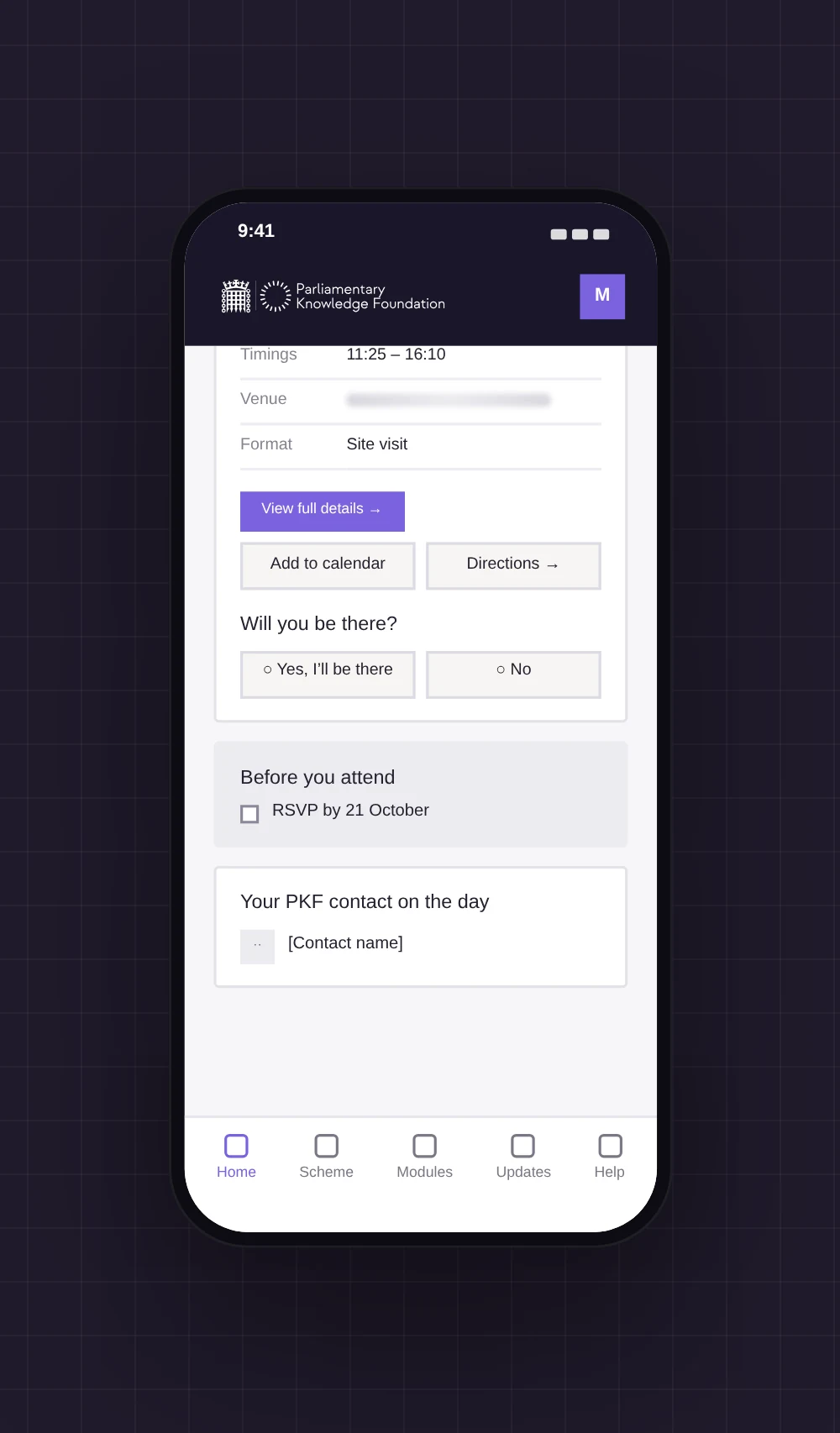
A member’s home page leads with the next module: arrival, timings, venue and format, with buttons to reply, add it to a calendar and get directions. A Before you go checklist and a contact for the day sit beside it. Missing details show as TBC instead of holding a module back.
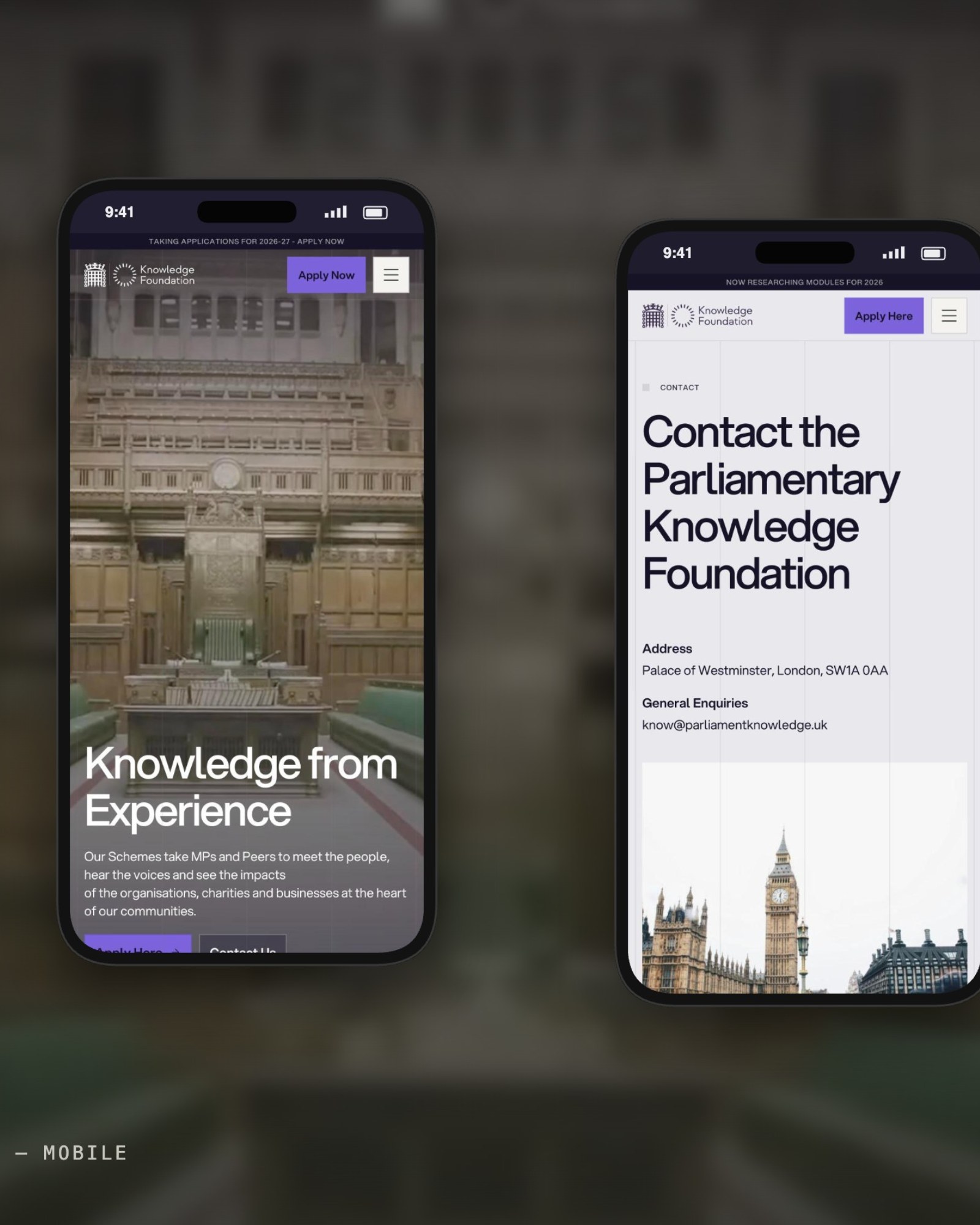
On a phone the portal has a bottom tab bar and can be added to the home screen.
01 — Challenge
PKF needed three things that worked as one: a brand to carry the Foundation, a public site that explained its schemes to the parliamentarians who apply and the organisations that host them, and a private place for members once they were on a scheme.
Schemes, modules and partners change every year, and the team is small. Everything had to stay accurate without rebuilding pages, and nothing could reach an MP before it was right.
02 — Role
- Brand and presentation work for the Parliamentary Knowledge Schemes (2024–25), and the Foundation’s lockups.
- Information architecture and content model for the website: schemes, modules, case studies, events, people and partners.
- Webflow design and build. The site went live in June 2026.
- The members’ portal: product design and UX for four roles, the access model, the link to PKF’s Notion workspace, and the build on PKF’s own domain.
- A portal prototype in July 2026, then the build, an onboarding guide for the team and launch support.
- Ongoing creative support on retainer.
03 — Approach
One lockup, used whole. A website built from CMS collections, with a route for each audience. A private portal that reads from a publication layer in Notion, shows each role only what it needs, and holds every change until a person publishes it.
Identity
04 — Outcome
The website has been live at parliamentknowledge.uk since June 2026 and is taking applications for 2026–27. PKF’s scheme team had the portal from 14 October 2026, and it opened to MPs on 21 October. Changes from the team’s first weeks of use went in during launch week, and a second phase is being planned with PKF.
Portal screens show the member preview, which uses placeholder names. Venues and dates are blurred.
Credits
Project Description
The Parliamentary Knowledge Foundation takes MPs and Peers out of Westminster to see frontline services, industry and nature at first hand. Base Camp worked on its brand, designed and built its Webflow website, and then built the portal members use from the first invitation to the day itself.
Client
Parliamentary Knowledge Foundation — Brand, Website & Portal
Date
2024–2026
Services
Brand / Information Architecture / Website Design / Webflow / Product Design / Build
Sector
Parliament / Education
The work. What we did, and what it changed.
PKF needed three things that worked as one: a brand to carry the Foundation, a public site that explained its schemes to the parliamentarians who apply and the organisations that host them, and a private place for members once they were on a scheme.
Schemes, modules and partners change every year, and the team is small. Everything had to stay accurate without rebuilding pages, and nothing could reach an MP before it was right.
- Brand and presentation work for the Parliamentary Knowledge Schemes (2024–25), and the Foundation’s lockups.
- Information architecture and content model for the website: schemes, modules, case studies, events, people and partners.
- Webflow design and build. The site went live in June 2026.
- The members’ portal: product design and UX for four roles, the access model, the link to PKF’s Notion workspace, and the build on PKF’s own domain.
- A portal prototype in July 2026, then the build, an onboarding guide for the team and launch support.
- Ongoing creative support on retainer.
One lockup, used whole. A website built from CMS collections, with a route for each audience. A private portal that reads from a publication layer in Notion, shows each role only what it needs, and holds every change until a person publishes it.
The website has been live at parliamentknowledge.uk since June 2026 and is taking applications for 2026–27. PKF’s scheme team had the portal from 14 October 2026, and it opened to MPs on 21 October. Changes from the team’s first weeks of use went in during launch week, and a second phase is being planned with PKF.
Portal screens show the member preview, which uses placeholder names. Venues and dates are blurred.
The site's job is to make a day in the field easy to say yes to.
“The work wasn't just about making it look better — it was about building a clearer relationship between product, story and experience.”
Related Work — More from the studio. Selected projects where brand, design, and performance move as one.


Shackleton × Defender — Rally Partnership
Partnership Strategy / Concept / Production / Creative Direction
Shackleton — Made to Move
Campaign Concept / Production / Talent / Creative Direction
Shackleton — The Exploration System
Brand Strategy / Product Strategy / System Design / Creative Direction